

Factory Direct PPR Fitting
Resistance to Chemical Scaling in PPR Pipe Fittings Explained
Chemical Scaling as a System Efficiency Issue
Chemical scaling is a common challenge in water supply and heating systems, particularly in areas with hard water or high mineral content. Scale buildup on internal pipe surfaces can restrict flow, increase pressure loss, and reduce heat transfer efficiency. Over time, excessive scaling may also contribute to operational noise and higher energy consumption. PPR pipe fittings are widely used because they demonstrate strong resistance to chemical scaling, helping systems maintain efficiency and reliability over long service periods.
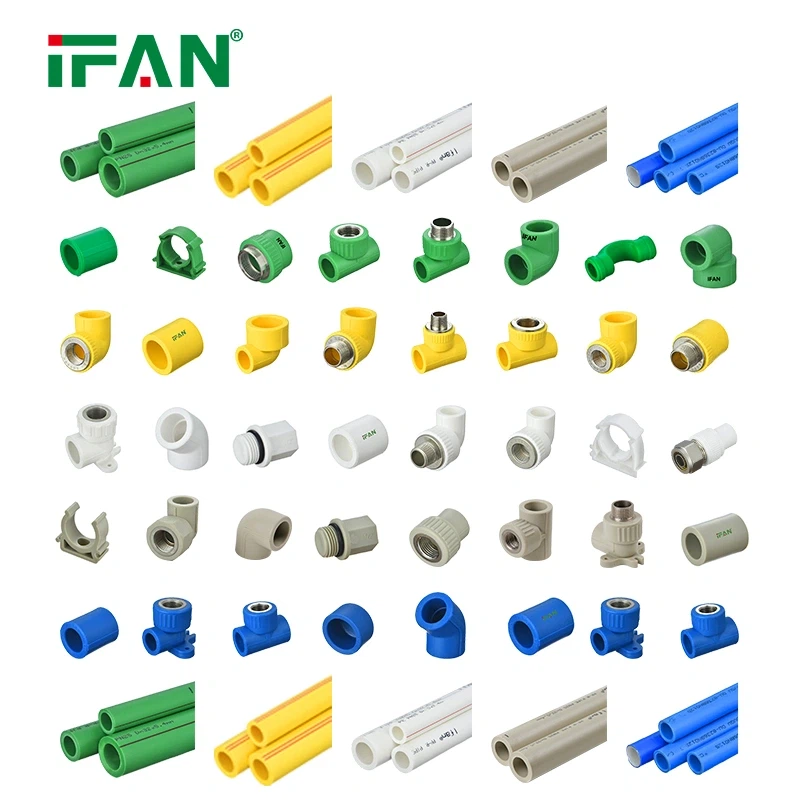
Non-Reactive Material Surface Characteristics
The resistance of PPR fittings to chemical scaling begins with the material's inherent surface properties. PPR has a smooth and non-reactive internal surface that does not readily interact with dissolved minerals in water. Unlike rough or porous materials, PPR does not provide favorable conditions for mineral crystals to attach and grow. This low affinity for scale formation significantly reduces the rate at which deposits accumulate on internal surfaces.
Smooth Internal Geometry and Reduced Adhesion
Internal surface smoothness plays a critical role in limiting scale buildup. PPR pipe fittings are manufactured with uniform internal contours and low surface roughness. Smooth surfaces reduce friction and minimize areas where minerals can settle. As water flows through the fitting, deposits are less likely to adhere, and any small particles that do form are more easily carried away by normal flow conditions.
Stability Under Temperature Variation
Chemical scaling is often accelerated at elevated temperatures, especially in hot water systems. PPR maintains dimensional stability and surface integrity under typical operating temperatures, preventing micro-surface changes that could promote scale adhesion. Because the material does not degrade or roughen significantly over time, its resistance to scaling remains consistent throughout the fitting's service life.
Impact on Long-Term Flow Efficiency
By limiting chemical scaling, PPR pipe fittings help preserve original flow capacity and pressure characteristics. Reduced scale buildup means that internal diameters remain effectively unchanged, supporting stable flow rates and minimizing energy loss. This stability is particularly beneficial in systems designed for long-term operation, where maintaining hydraulic efficiency is a key performance requirement.
Reduced Maintenance and Operational Benefits
Lower susceptibility to chemical scaling translates into reduced maintenance needs. Systems using PPR fittings are less likely to require frequent cleaning or chemical treatment to restore flow capacity. This advantage lowers operational costs and minimizes system downtime, making PPR fittings a practical choice for residential, commercial, and institutional applications.

Reliable Performance in Diverse Water Conditions
The resistance of PPR pipe fittings to chemical scaling supports consistent performance across a wide range of water qualities. Through non-reactive material behavior, smooth internal surfaces, and thermal stability, PPR fittings maintain clean flow paths and long-term efficiency. These characteristics contribute to dependable system operation and extended service life.
Hot Tags: factory direct ppr fitting, China, suppliers, manufacturers, factory, wholesale, cheap, discount, low price, in stock, free sample, PPR Fitting Elbow, PPR Fitting Female, PPR Fitting Plug, PPR Fitting Socket, PPR Fitting Cap, Pure PPR Fitting
Send Inquiry
