
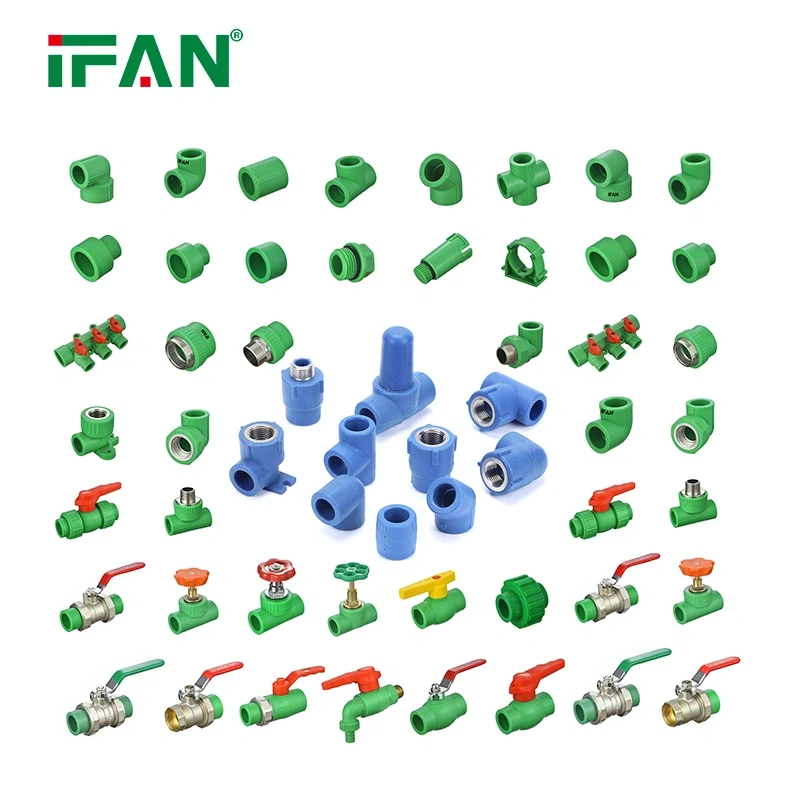
DIN Standard PPR Fitting
Why PPR Pipe Fittings Support Long-Term Drinking Water Safety
Drinking Water Safety as a System Priority
Ensuring long-term drinking water safety is a fundamental requirement for modern plumbing systems. Materials used in pipes and fittings must maintain stable performance without introducing contaminants or compromising water quality over time. PPR pipe fittings are widely adopted in potable water systems because their material properties and manufacturing processes are designed to support hygienic, reliable, and long-lasting water delivery.

Chemically Stable and Non-Reactive Material Behavior
PPR is chemically stable under normal drinking water conditions. Its non-reactive nature means it does not readily interact with water or common dissolved substances. As a result, PPR fittings do not release unwanted substances into the water during long-term use. This stability helps preserve the original taste, odor, and quality of drinking water, supporting safe consumption over extended service periods.
Smooth Internal Surfaces and Hygiene Benefits
The smooth internal surface of PPR pipe fittings plays an important role in maintaining water hygiene. Low surface roughness reduces the likelihood of sediment accumulation and minimizes areas where microorganisms could attach and grow. By discouraging deposit buildup, PPR fittings help maintain clean internal flow paths, which contributes to consistent water quality and reduces hygiene-related risks within the system.
Resistance to Scaling and Internal Contamination
In many water systems, mineral scaling can create environments where contaminants may accumulate. PPR fittings demonstrate strong resistance to chemical scaling, allowing internal surfaces to remain relatively clean over time. This resistance helps prevent secondary contamination that may arise from scale layers trapping impurities. By maintaining smooth, clean surfaces, PPR fittings support safer long-term water delivery.
Stable Performance Under Temperature and Pressure
Drinking water systems often experience variations in pressure and temperature. PPR pipe fittings are designed to maintain mechanical integrity under these conditions without degrading. Their ability to resist deformation, micro-cracking, and fatigue ensures that fittings do not develop internal defects that could compromise water safety. Stable structural performance is essential for preventing leaks and maintaining system hygiene.
Heat Fusion Joints and Leak Prevention
PPR systems use heat fusion joining, which creates a homogeneous material connection between the pipe and fitting. This joint method eliminates gaps and mechanical interfaces where contaminants could accumulate or leak into the system. Because the joint material matches the pipe material, both age uniformly, supporting long-term integrity and hygienic performance.

Long-Term Reliability for Potable Water Systems
Through chemical stability, smooth internal surfaces, resistance to scaling, and reliable joint integrity, PPR pipe fittings support long-term drinking water safety. These characteristics ensure that water quality remains consistent from installation through extended service life, making PPR fittings a trusted solution for potable water applications in residential and commercial systems.
Hot Tags: din standard ppr fitting, China, suppliers, manufacturers, factory, wholesale, cheap, discount, low price, in stock, free sample, PPR Fitting Elbow, PPR Fitting Female, PPR Fitting Plug, PPR Fitting Socket, PPR Fitting Tee, Pure PPR Fitting
Send Inquiry
