


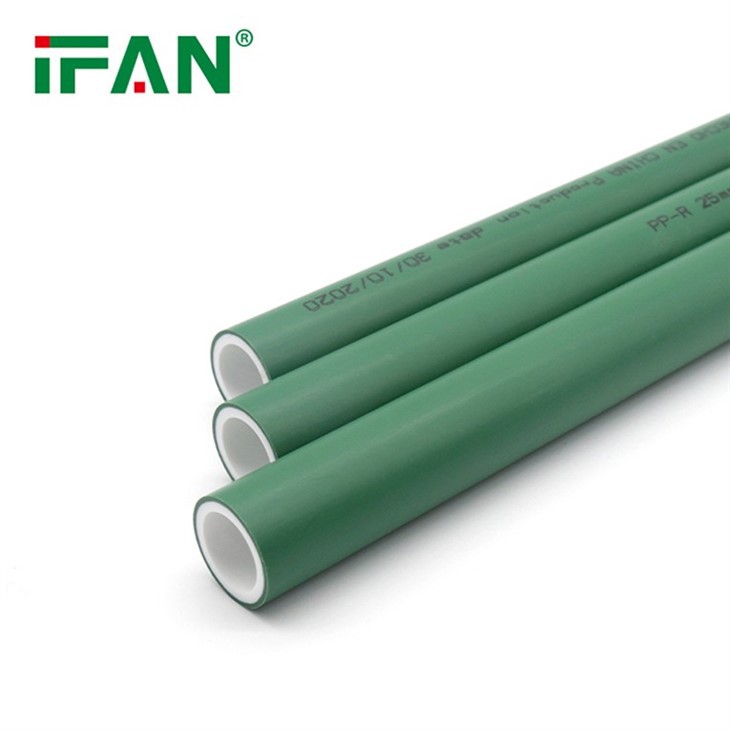

Plastic PPR Plumbing
IFAN factory 30+ years manufacture experience support color /size customization support free sample.This is our Facebook Website:www.facebook.com,Click to watch IFAN's product video.
Joining Methods for PPR Pipes: Hot Melt vs. Electrofusion
Polypropylene Random Copolymer (PPR) pipes are widely used in plumbing, heating, and industrial applications due to their durability, corrosion resistance, and long service life. A key aspect of any PPR piping system's performance lies in the strength and reliability of its joints. Among the most common joining methods are hot melt welding and electrofusion welding. This article explores both techniques in detail, highlighting their differences, advantages, and best-use scenarios.

1. Overview of Hot Melt Welding
Hot melt welding, also known as socket fusion, is the most widely used method for joining PPR pipes. It involves heating both the pipe and fitting surfaces using a heated metal tool (welding machine) until the material becomes soft. Once heated, the components are pressed together and allowed to cool, forming a homogeneous, leak-proof joint. This method is simple, cost-effective, and suitable for most residential and commercial installations.
2. Overview of Electrofusion Welding
Electrofusion welding uses special electrofusion fittings with embedded resistance wires. When an electrical current is applied, the wires generate heat, melting the interface between the pipe and fitting. As the molten surfaces cool, they fuse into a strong, permanent bond. Electrofusion is typically used in systems requiring high joint integrity or where precision and minimal joint disturbance are crucial-such as industrial or buried installations.
3. Comparison of Joint Strength and Reliability
Both methods produce strong joints, but their mechanical properties can differ slightly depending on the application. Hot melt welding creates a fully fused interface by physically melting and bonding the entire socket area, which results in excellent mechanical strength. Electrofusion, while also strong, depends heavily on precise voltage control and proper alignment, which can lead to variations in joint strength if not executed correctly. In critical systems, electrofusion often provides better repeatability under controlled conditions.
4. Equipment, Skill Requirements, and Installation Speed
Hot melt welding requires a socket welding tool, and the process is relatively fast and easy to learn, making it ideal for on-site installation. Most plumbers can achieve strong joints with minimal training. Electrofusion, on the other hand, requires electrofusion control units, barcoded fittings, and often more stringent surface preparation and alignment procedures. While it offers higher precision, it is generally slower and more expensive to perform.
5. Best Applications for Each Method
Hot melt welding is best suited for domestic water supply systems, heating lines, and above-ground installations, where cost and speed are key factors. It is highly reliable for pipe sizes up to 160mm. Electrofusion is ideal for industrial systems, underground piping, gas distribution, or situations where access is limited and movement during cooling must be minimized. It also offers better results for larger-diameter or high-pressure PPR piping.

Conclusion
Both hot melt and electrofusion methods offer dependable solutions for joining PPR pipes, each with distinct advantages depending on the project's demands. Hot melt welding stands out for its simplicity and cost-efficiency, while electrofusion provides superior control and precision for critical or complex installations. By understanding the strengths and limitations of each method, installers and engineers can select the most suitable joining technique to ensure system integrity, safety, and long-term performance.
Hot Tags: plastic ppr plumbing, China, suppliers, manufacturers, factory, wholesale, cheap, discount, low price, in stock, free sample, Pure Plastic PPR Pipe, Green Plastic PPR Pipe, Plastic PPR Pipe, Grey Plastic PPR Pipe, PPR Pipe, White Plastic PPR Pipe
Send Inquiry
