
IFAN factory 30+ years manufacture experience support color /size customization support free sample.Welcome to consult for catalog and free samples.This is our Facebook Website:www.facebook.com,Click to watch IFAN's product video.Compared with Tomex products, our IFAN products from quality to price are your best choice, welcome to buy!
1. Introduction to Bronze as an Engineering Material
Bronze has been used for centuries in applications that require a balance of strength, corrosion resistance, and durability. In modern plumbing and industrial piping systems, bronze pipe fittings remain highly valued because their metallurgical structure provides reliability under challenging operating conditions. Unlike plastics or lightweight alloys, bronze offers a stable microstructure that performs well under thermal cycling, fluctuating pressure, and long-term exposure to water or chemicals. These characteristics make bronze fittings a preferred choice for installations where safety and longevity are priorities.

2. Alloy Composition and Its Impact on Performance
The metallurgical properties of bronze depend heavily on its alloy composition. Traditional bronze consists primarily of copper and tin, but commercial bronze pipe fittings often incorporate additional elements such as zinc, lead, or phosphorus. Each element plays a specific role in enhancing performance. Tin increases hardness and improves resistance to wear, while zinc contributes to mechanical strength and structural stability. Small amounts of lead improve machinability without significantly weakening the overall material. The precise balance of these elements determines the fitting's resistance to deformation, its temperature tolerance, and its long-term durability.
3. Microstructure and Grain Characteristics
At the microscopic level, bronze exhibits a fine, uniform grain structure that directly influences its mechanical behavior. A well-controlled grain size improves tensile strength and enhances the ability of the fitting to resist cracking under stress. During the production of bronze pipe fittings, the cooling rate after casting, the chosen heat-treatment method, and the working process all contribute to grain refinement. A more refined grain structure results in smoother interior surfaces, reduced friction during water flow, and better sealing integrity. Manufacturers who carefully manage these metallurgical factors achieve fittings that remain stable even after years of service.
4. Corrosion Resistance Within Plumbing Environments
Bronze is naturally corrosion resistant, largely due to its copper content. When exposed to oxygen and moisture, bronze forms a thin protective oxide layer that prevents deeper corrosion. This self-protecting mechanism makes bronze pipe fittings particularly suitable for marine environments, industrial water systems, and areas with varying pH levels. Unlike iron-based metals that may rust or pit over time, bronze maintains its structural integrity, reducing the likelihood of leakage or premature failure. Additionally, the alloy's resistance to dezincification-the selective removal of zinc-further enhances its suitability for high-moisture or chemically aggressive settings.
5. Mechanical Strength and Pressure Performance
The metallurgical stability of bronze also contributes to its excellent pressure-handling capability. Bronze pipe fittings can endure repeated pressure fluctuations without losing shape or developing fatigue cracks. Their combination of high yield strength and good ductility makes them ideal for systems that undergo regular mechanical stress, such as pumping stations or hot-and-cold water supply lines. The internal structure of bronze absorbs shock and vibration effectively, which reduces the risk of connection failures. Because of these mechanical advantages, bronze fittings are often trusted in critical infrastructure where failure is not an option.
6. Heat Resistance and Thermal Stability
Bronze retains its mechanical properties across a wide temperature range. The alloy's melting point and structural stability make it suitable for both hot-water systems and environments where temperature changes are frequent. Thermal expansion is predictable and well-controlled, helping maintain tight connections and preventing stress on pipes and seals. This thermal stability is a direct result of the alloy's metallurgical makeup, where copper and tin create a phase structure that remains stable even under elevated temperatures. For systems that must operate continuously and reliably, this resistance to thermal fatigue is a major advantage.
7. Why Metallurgy Matters in Quality Assessment
Understanding the metallurgical characteristics of bronze pipe fittings is essential for selecting high-quality products. Fittings with optimized alloy composition, refined grain structure, and proven corrosion resistance will perform better in both residential and industrial settings. Manufacturers who pay attention to metallurgical science can offer fittings with longer service life, reduced maintenance needs, and improved safety margins. For buyers, recognizing the importance of metallurgy helps in evaluating product specifications, verifying standards, and ensuring long-term reliability in plumbing systems.
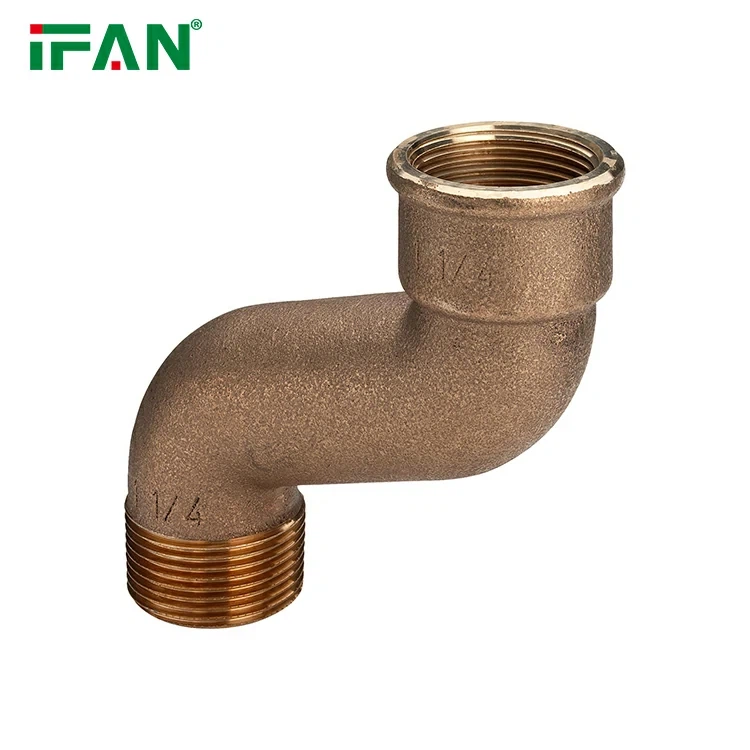
Conclusion
Bronze pipe fittings stand out because of their strong metallurgical foundation. From alloy composition and microstructure to corrosion resistance and mechanical strength, each property contributes to the dependable performance that bronze is known for. As plumbing systems continue to demand durability and stability, understanding the metallurgical qualities behind bronze fittings becomes increasingly valuable for installers, suppliers, and end-users alike.