
IFAN factory 30+ years manufacture experience support color /size customization support free sample.Welcome to consult for catalog and free samples.This is our Facebook Website:www.facebook.com,Click to watch IFAN's product video.Compared with Tomex products, our IFAN products from quality to price are your best choice, welcome to buy!
High-Density Polyethylene (HDPE) pipe fittings are widely used in water supply, gas distribution, and industrial applications due to their durability, flexibility, and corrosion resistance. To ensure reliable performance and system safety, it is essential to understand the ratings and specifications associated with HDPE fittings. These ratings provide guidance on pressure handling, temperature limits, material properties, and compatibility, enabling engineers and contractors to make informed decisions during design and installation.
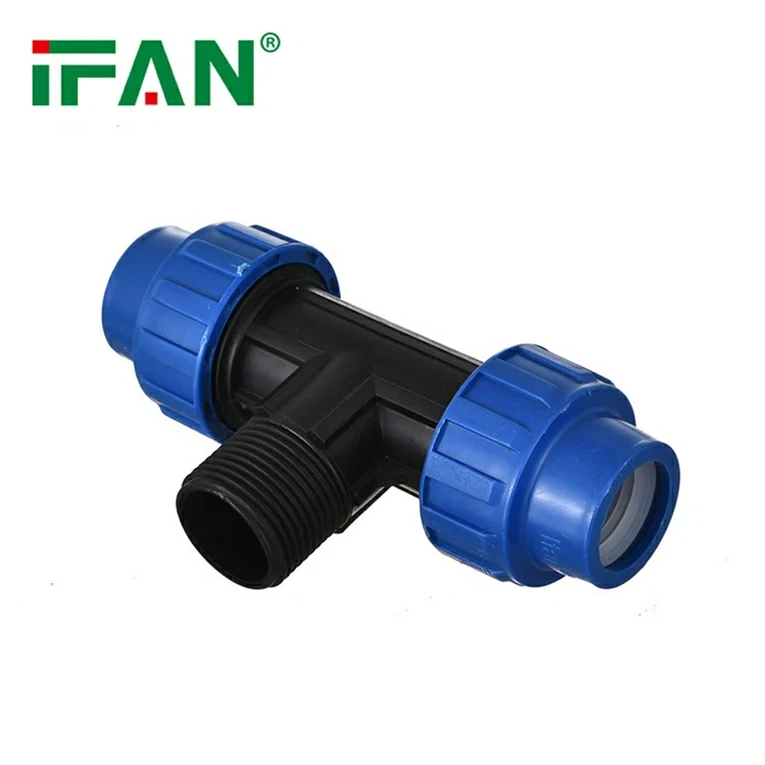
1. Pressure Ratings of HDPE Pipe Fittings
Pressure rating is one of the most important specifications for HDPE fittings. It indicates the maximum internal pressure that the fitting can safely withstand over its intended service life. HDPE fittings are typically classified using PN (Pressure Nominal) ratings, such as PN10, PN12.5, PN16, and PN20, which correspond to the pressure in bars the fitting can handle at 20°C. Correctly matching the fitting's pressure rating to the system's operating conditions is critical to prevent leaks, deformation, or failure.
2. Temperature Limits and Performance
Temperature ratings define the range of operating temperatures that HDPE fittings can safely handle without compromising structural integrity. Standard HDPE fittings can generally operate in temperatures from -40°C to 60°C, with some high-performance grades capable of withstanding higher temperatures. Temperature affects the material's flexibility and pressure capacity, so designers must consider both the expected temperature fluctuations and the fluid characteristics in the system when selecting fittings.
3. Material Specifications
The material specification of HDPE fittings is typically defined according to international standards such as ASTM D3350 or ISO 4427. These standards classify the polyethylene resin used, including key properties like density, melt flow index, environmental stress crack resistance (ESCR), and hydrostatic strength. Material specifications ensure that the fittings provide consistent performance under mechanical stress, chemical exposure, and environmental conditions. Choosing the right material grade is crucial for long-term reliability and compliance with safety standards.
4. Dimensional Standards and Compatibility
HDPE pipe fittings must adhere to precise dimensional standards to ensure compatibility with pipes and other system components. Standards such as ASTM D3035, ASTM F714, and ISO 4427 define critical dimensions including outer diameter, wall thickness, and socket depth. Consistent dimensions enable leak-free connections, proper fusion welding, and alignment in complex piping networks. Understanding these specifications helps contractors select fittings that match the system's pipes, reducing installation errors and operational risks.
5. Certification and Testing Requirements
Certified HDPE fittings undergo rigorous testing to validate their performance according to international standards. Common tests include hydrostatic pressure testing, impact resistance evaluation, dimensional checks, and environmental stress crack resistance assessments. Certifications from organizations such as NSF International, DVGW, or WRAS provide assurance that the fittings meet drinking water or industrial safety requirements. Selecting certified fittings not only ensures system reliability but also simplifies regulatory approvals and quality assurance processes.
6. Selecting the Right Fittings Based on Ratings
Understanding the ratings and specifications allows engineers and installers to make informed decisions when designing piping systems. Pressure, temperature, and material ratings should align with the intended application, environmental conditions, and expected service life. Additionally, compliance with dimensional standards and certified testing ensures compatibility and long-term performance. Proper selection based on ratings reduces maintenance costs, minimizes leakage risks, and improves overall system efficiency.

Conclusion: Ensuring System Safety Through Proper Ratings
HDPE pipe fitting ratings and specifications are critical for ensuring safe, reliable, and efficient piping systems. By understanding pressure ratings, temperature limits, material properties, dimensional standards, and certification requirements, engineers can select the right fittings for any application. Proper adherence to these specifications not only enhances system performance but also extends service life, supports compliance with international standards, and ensures the safety of water, gas, and industrial infrastructure.