
IFAN factory 30+ years manufacture experience support color /size customization support free sample.Welcome to consult for catalog and free samples.This is our Facebook Website:www.facebook.com,Click to watch IFAN's product video.Compared with Tomex products, our IFAN products from quality to price are your best choice, welcome to buy!
1. Introduction: Merging Form with Function in Valve Design
In fluid control systems, the efficiency and reliability of components depend heavily on how well structural engineering aligns with fluid dynamics. Brass gate valves, known for their durability and corrosion resistance, are now being optimized not only for strength but also for superior flow performance. By integrating fluid mechanics principles into their structural design, manufacturers are creating valves that reduce energy loss, minimize turbulence, and ensure stable operation across diverse applications.
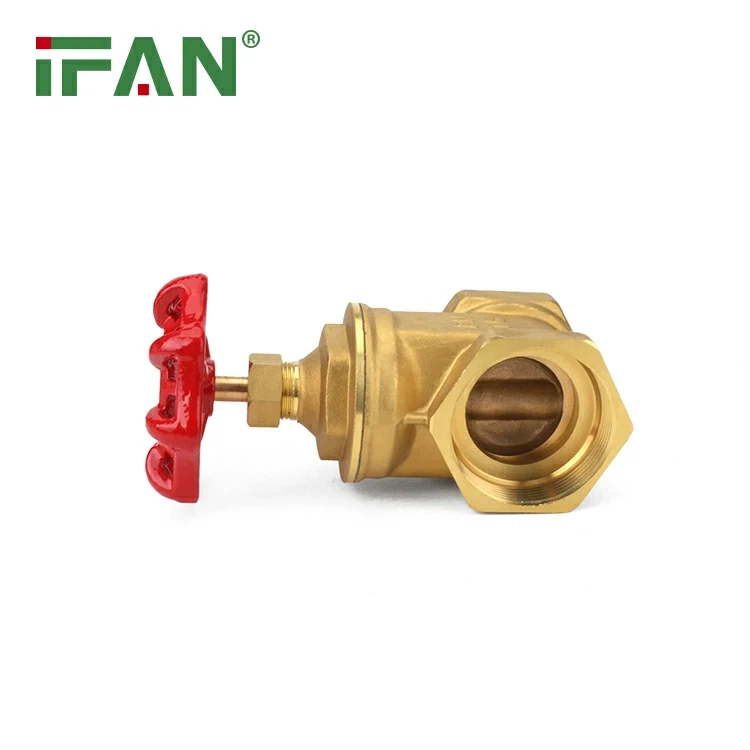
2. Streamlined Internal Flow Path Reduces Pressure Loss
A core concept in fluid mechanics is minimizing resistance to flow. Modern brass gate valves are designed with streamlined internal cavities, reducing sharp angles and flow disruptions. The gate (wedge) retracts fully into a widened chamber, allowing unobstructed flow when the valve is open. This reduces pressure drop across the valve and helps maintain a stable flow rate, especially critical in high-volume or long-distance pipeline systems.
3. Optimized Gate Profile Enhances Sealing and Flow Control
The geometry of the gate itself plays a vital role in managing how fluid passes through the valve. Advanced brass gate valves feature precision-machined gates with tapered edges and smooth surfaces, which help direct flow with minimal turbulence. When closed, the flat contact surface provides excellent sealing, while during opening and closing cycles, the profile ensures controlled fluid movement, reducing cavitation and water hammer risks.
4. Housing Shape and Flow Symmetry for Balanced Operation
The external body and internal chamber of the valve are engineered for symmetrical flow distribution. This balance minimizes lateral forces acting on internal components, leading to less wear on the stem and seat surfaces. By aligning the valve ports with the natural direction of flow, the design reduces swirling and back pressure, enhancing both the valve's performance and the overall system efficiency.
5. Integration of CFD (Computational Fluid Dynamics) in Modern Design
With advancements in simulation technology, many manufacturers now use computational fluid dynamics (CFD) to model how fluids interact with valve components before production. This allows engineers to test and refine the valve's internal geometry for optimal flow characteristics. The result is a brass gate valve that not only performs better under pressure but also contributes to energy savings and system longevity.

Conclusion
The structural design of brass gate valves has evolved into a sophisticated blend of mechanical engineering and fluid mechanics. By carefully considering internal geometry, gate profile, and flow symmetry-and validating these elements through CFD analysis-modern brass gate valves deliver outstanding performance in both residential and industrial applications. This perfect synergy of structure and science ensures better flow control, reduced energy loss, and longer service life, proving that smart design makes all the difference.