
Introduction: Why Impact Resistance Matters in Pipeline Systems
Pipeline systems are often exposed to mechanical stress during transportation, installation, and long-term operation. Accidental drops, external pressure, construction equipment contact, or environmental movement can introduce sudden impact forces to pipe fittings. If the material lacks sufficient toughness, these impacts may lead to cracks, deformation, or premature system failure.
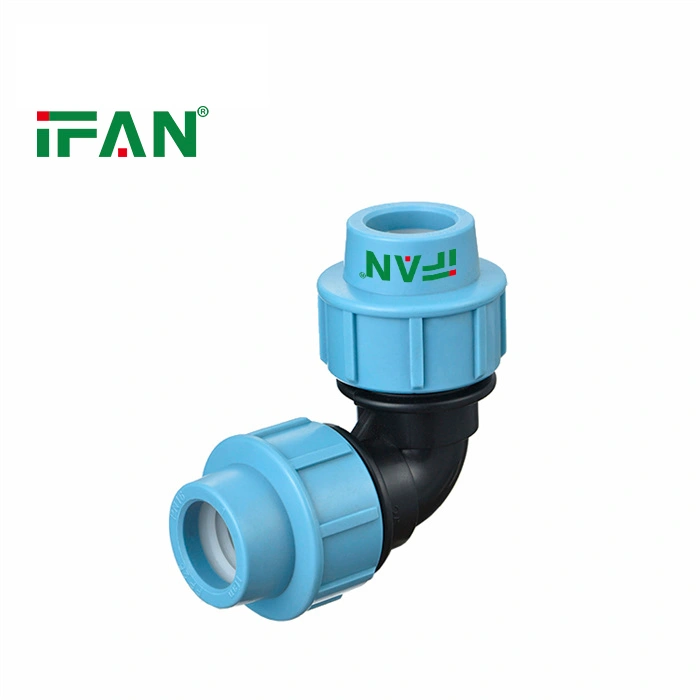
High-Density Polyethylene (HDPE) pipe fittings are widely recognized for their excellent impact resistance. Their ability to absorb and dissipate mechanical energy allows them to maintain structural integrity even when subjected to unexpected forces. This performance advantage is largely the result of HDPE's molecular structure, material flexibility, and carefully engineered manufacturing processes.
Molecular Structure Supporting Impact Toughness
The foundation of impact resistance in HDPE pipe fittings lies in the molecular configuration of high-density polyethylene. HDPE contains relatively linear polymer chains with minimal branching. This structure allows the molecules to pack closely together while still maintaining some mobility within the polymer matrix.
When an impact occurs, the molecular chains can shift slightly to absorb the incoming energy. Instead of forming brittle fractures, the material distributes the stress across a broader region of the structure. This ability to deform temporarily without breaking is what gives HDPE its well-known toughness.
The combination of high crystallinity and flexible amorphous regions creates a balanced material that offers both strength and energy absorption capacity.
Flexibility as a Shock Absorption Mechanism
Another important factor contributing to impact resistance is the inherent flexibility of HDPE. Unlike rigid materials that may crack when subjected to sudden force, HDPE pipe fittings can bend slightly and then return to their original shape once the load is removed.
This elastic behavior allows the fittings to function as shock absorbers within the pipeline system. When mechanical impact occurs, the material temporarily redistributes stress rather than concentrating it in a single location.
As a result, HDPE fittings are less likely to develop fractures or structural weaknesses during handling and installation, even in demanding construction environments.
Performance in Low-Temperature Conditions
Many plastic materials become brittle at lower temperatures, increasing the risk of cracking during impact. However, HDPE pipe fittings maintain good toughness even in relatively cold environments.
The polymer structure allows sufficient molecular movement at lower temperatures, preventing the sudden fracture behavior seen in some other materials. Because of this property, HDPE pipeline systems are often selected for outdoor installations or regions where seasonal temperature variation is significant.
Impact resistance at low temperatures ensures that fittings remain reliable during winter construction work or in cold storage conditions.
Resistance to Crack Propagation After Impact
Impact damage does not always cause immediate failure. In some materials, small cracks created by impact may gradually expand under pressure and lead to long-term structural problems.
HDPE pipe fittings demonstrate strong resistance to crack propagation. The dense molecular network and strong intermolecular bonding slow the growth of microscopic cracks that might appear on the surface.
Even if minor scratches or surface marks occur during installation, the material structure helps prevent these imperfections from developing into major fractures. This characteristic significantly improves the long-term reliability of HDPE piping systems.
Manufacturing Processes Enhancing Impact Strength
The impact resistance of HDPE fittings is also influenced by modern manufacturing techniques. During injection molding, precise control of temperature, pressure, and cooling conditions ensures uniform material distribution throughout the fitting body.
Uniform crystallization prevents internal weak spots that could reduce mechanical toughness. Careful mold design and controlled cooling rates help maintain consistent wall thickness and minimize residual internal stress.
These manufacturing controls allow HDPE fittings to achieve reliable mechanical performance across large production volumes.
Conclusion: Durable Protection Against Mechanical Shock
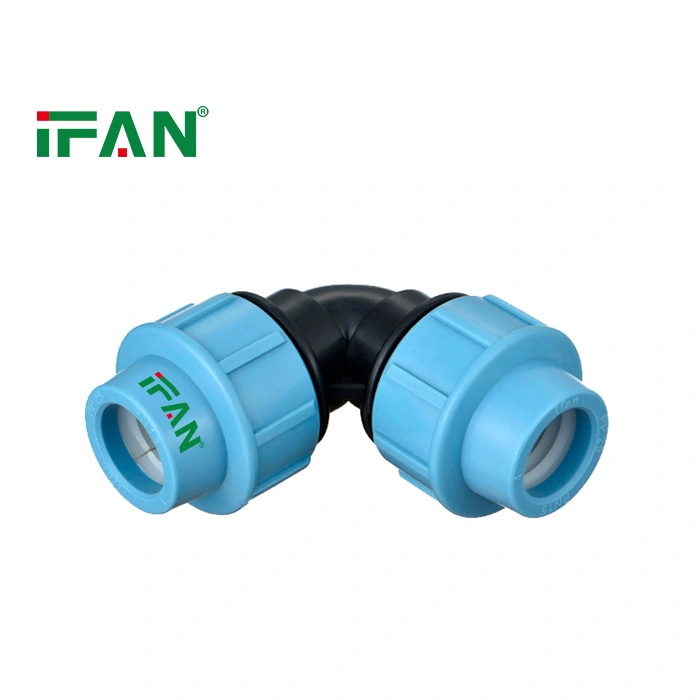
HDPE pipe fittings offer outstanding impact resistance due to their unique polymer structure, balanced flexibility, and controlled manufacturing processes. The ability to absorb mechanical energy without fracturing makes them particularly suitable for demanding pipeline installations and long-term infrastructure projects.
By resisting both immediate mechanical damage and long-term crack propagation, HDPE fittings help maintain the structural stability of pipeline systems. This durability, combined with other advantages such as chemical resistance and flexibility, explains why HDPE remains a preferred material in modern fluid transportation networks.