
IFAN factory 30+ years manufacture experience support color /size customization support free sample.Welcome to consult for catalog and free samples.This is our Facebook Website:www.facebook.com,Click to watch IFAN's product video.Compared with Tomex products, our IFAN products from quality to price are your best choice, welcome to buy!
1. Introduction to CPVC Pipe Fittings and Corrosion
The Importance of CPVC in Piping Systems
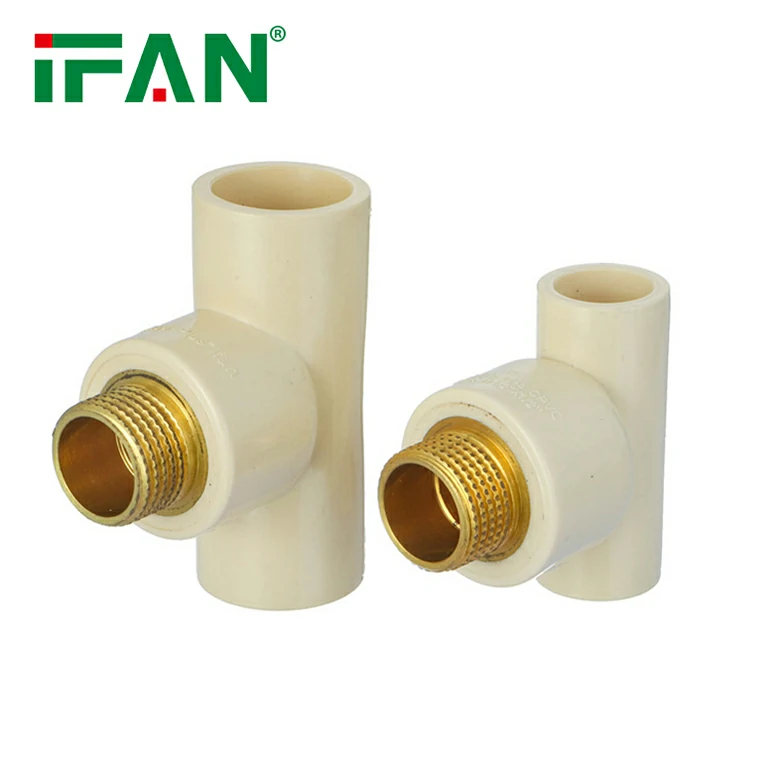
CPVC (Chlorinated Polyvinyl Chloride) pipe fittings are widely utilized in diverse piping systems, spanning from residential plumbing to industrial applications. Their popularity can be attributed to a combination of favorable properties, including high - temperature resistance, good mechanical strength, and notable corrosion resistance. Corrosion is a significant concern in piping systems as it can lead to leaks, system failures, and potential safety hazards. Understanding and enhancing the corrosion resistance of CPVC pipe fittings is crucial for ensuring the long - term reliability and functionality of these systems.
2. Mechanisms of Corrosion in CPVC Pipe Fittings
Chemical Attack
Impact of Aggressive Chemicals
One of the primary corrosion mechanisms affecting CPVC pipe fittings is chemical attack. CPVC may come into contact with a variety of chemicals depending on the application. Strong acids, such as sulfuric acid or nitric acid, can react with the CPVC structure. These acids can potentially break down the polymer chains, leading to a degradation of the material's properties. For example, sulfuric acid can cause the substitution of chlorine atoms in the CPVC polymer, weakening the molecular bonds. In industrial settings where CPVC pipes are used to transport chemical substances, the risk of chemical attack is particularly high. Similarly, exposure to strong alkalis, like sodium hydroxide, can also initiate chemical reactions that damage the CPVC.
Oxidation
Role of Oxygen in Corrosion
Oxidation is another significant corrosion mechanism for CPVC. Oxygen in the environment, especially in the presence of heat or light, can react with the CPVC material. This reaction can lead to the formation of peroxides and hydroperoxides within the polymer structure. These unstable compounds can decompose into free radicals, which then react with the CPVC chains, causing chain - scission or cross - linking. In outdoor applications or in systems where CPVC is exposed to air - containing fluids, oxidative corrosion can gradually degrade the pipe fittings. For instance, in an open - air chemical storage facility, the continuous exposure of CPVC pipe fittings to atmospheric oxygen can accelerate the oxidation process.
Stress - Assisted Corrosion
Interaction of Stress and Corrosion
Stress - assisted corrosion occurs when CPVC pipe fittings are subjected to mechanical stress while in a corrosive environment. Internal pressure from the fluid flowing through the pipes, installation - induced stress, or thermal stress can all contribute to this phenomenon. The stress can create micro - cracks or imperfections in the CPVC material. These areas are more vulnerable to corrosion as they provide sites for chemical or oxidative attack to occur more rapidly. For example, in a hot - water plumbing system, the combination of thermal stress due to temperature fluctuations and the presence of dissolved oxygen in the water can lead to stress - assisted corrosion of CPVC pipe fittings.
3. Factors Influencing the Corrosion Resistance of CPVC Pipe Fittings
Material Composition
Influence of Chlorine Content and Additives
The material composition of CPVC plays a vital role in its corrosion resistance. The chlorine content in CPVC is a key factor. Higher chlorine content generally enhances the chemical resistance of the material. Chlorine atoms in the polymer chain provide a certain degree of protection against chemical attack by making the polymer more stable. However, the manufacturing process and the quality of the base PVC resin used to produce CPVC also matter. Additionally, additives incorporated into CPVC can significantly affect its corrosion resistance. Stabilizers, for example, can help prevent degradation caused by heat, light, or chemical exposure. Antioxidants can be added to counteract the effects of oxidation, thus improving the overall corrosion resistance of the CPVC pipe fittings.
Environmental Conditions
Impact of Temperature, pH, and Chemical Concentration
Environmental conditions have a profound impact on the corrosion resistance of CPVC pipe fittings. Temperature is a critical factor. Higher temperatures can accelerate chemical reactions and the rate of corrosion. For example, in a high - temperature industrial process, the corrosion of CPVC by aggressive chemicals may occur more rapidly. The pH of the surrounding environment also matters. CPVC may be more resistant to corrosion in a neutral pH range, while extreme acidic or alkaline conditions can increase the likelihood of chemical attack. Moreover, the concentration of chemicals in contact with the CPVC is important. Higher concentrations of corrosive substances generally lead to more severe corrosion.
Surface Finish and Manufacturing Quality
Effects of Smoothness and Defects
The surface finish and manufacturing quality of CPVC pipe fittings can influence their corrosion resistance. A smooth surface finish reduces the likelihood of chemical adsorption and the formation of corrosion - initiating sites. Rough surfaces, on the other hand, can trap chemicals and provide areas where corrosion can start more easily. Manufacturing defects, such as voids, cracks, or uneven thickness, can also compromise the corrosion resistance of CPVC pipe fittings. These defects can act as stress concentrators and entry points for corrosive substances, accelerating the corrosion process.
4. Testing Methods for Corrosion Resistance of CPVC Pipe Fittings
Immersion Testing
Simulating Chemical Exposure
Immersion testing is a commonly used method to evaluate the corrosion resistance of CPVC pipe fittings. In this test, samples of CPVC pipe fittings are immersed in solutions of corrosive chemicals for a specified period. The chemicals used can represent the actual substances the fittings may encounter in real - world applications. After the immersion period, the samples are examined for signs of corrosion, such as weight loss, changes in mechanical properties, or visual degradation. For example, a CPVC sample may be immersed in a solution of hydrochloric acid for several weeks, and then its tensile strength and surface appearance are compared to the pre - immersion state to assess the extent of corrosion.
Electrochemical Testing
Measuring Corrosion Rates
Electrochemical testing can provide valuable information about the corrosion resistance of CPVC pipe fittings. Techniques such as electrochemical impedance spectroscopy (EIS) and linear polarization resistance (LPR) can be used. EIS measures the impedance of the CPVC - electrolyte interface, which can give insights into the corrosion mechanism and the integrity of the passive film on the CPVC surface. LPR, on the other hand, can be used to measure the corrosion rate of the material. By applying a small - amplitude alternating current or voltage to the CPVC sample in an electrolyte solution, the corrosion rate can be determined based on the measured electrical parameters.
5. Strategies to Improve the Corrosion Resistance of CPVC Pipe Fittings
Material Modification
Incorporating Corrosion - Resistant Additives
Material modification is an effective strategy to enhance the corrosion resistance of CPVC pipe fittings. As mentioned earlier, adding appropriate additives can play a crucial role. For example, incorporating specific types of corrosion inhibitors can form a protective layer on the surface of CPVC, preventing direct contact between the material and corrosive substances. Some additives can also react with the corrosive chemicals, neutralizing their harmful effects. Additionally, the development of new CPVC formulations with improved molecular structures, such as more cross - linked or branched polymers, can enhance the material's resistance to chemical and oxidative attack.
Surface Treatment
Applying Protective Coatings
Surface treatment can significantly improve the corrosion resistance of CPVC pipe fittings. Applying protective coatings, such as epoxy - based or fluoropolymer - based coatings, can provide an additional barrier against corrosion. These coatings can prevent the penetration of corrosive chemicals and oxygen to the CPVC surface. For example, in an industrial environment where CPVC pipes are exposed to a variety of aggressive chemicals, a fluoropolymer coating can offer excellent chemical resistance, reducing the risk of corrosion. The coating can be applied through methods like spraying or dipping, ensuring a uniform and continuous coverage.
Proper Installation and Maintenance
Minimizing Stress and Monitoring
Proper installation and maintenance are essential for maximizing the corrosion resistance of CPVC pipe fittings. During installation, care should be taken to avoid over - stressing the fittings, as stress - assisted corrosion can be a significant issue. Ensuring correct alignment, using appropriate installation tools, and not over - tightening connections can help prevent the introduction of stress. Regular monitoring of the piping system is also crucial. Visual inspections, non - destructive testing, and monitoring of environmental conditions can help detect early signs of corrosion. By identifying and addressing potential corrosion issues promptly, the service life of CPVC pipe fittings can be extended.
In conclusion, the corrosion resistance of CPVC pipe fittings is a complex but essential aspect of their performance. Understanding the corrosion mechanisms, factors influencing it, testing methods, and strategies to improve it is crucial for ensuring the long - term reliability and safety of piping systems that use CPVC pipe fittings. Continued research in this area will further enhance the effectiveness of CPVC in various applications.

IFAN PVC Pipe Fittings: Meeting Extensive International Standards for Optimal Performance
IFAN PVC pipe fittings not only adhere to the ASTM 2846 series standards but also support a broad range of other international and regional standards, including DIN 8079/8080 (502), ASTM F441/F441M SCH80 (503), DIN (504), DIN (505), GB/T 18993, AS/NZS 1477, CSA B137.6, NSF/ANSI 14, and TIS 17-2532/1131-2535. This comprehensive compliance ensures that IFAN PVC pipe fittings meet the highest requirements for durability, reliability, and versatility, making them a top choice for various applications worldwide.