
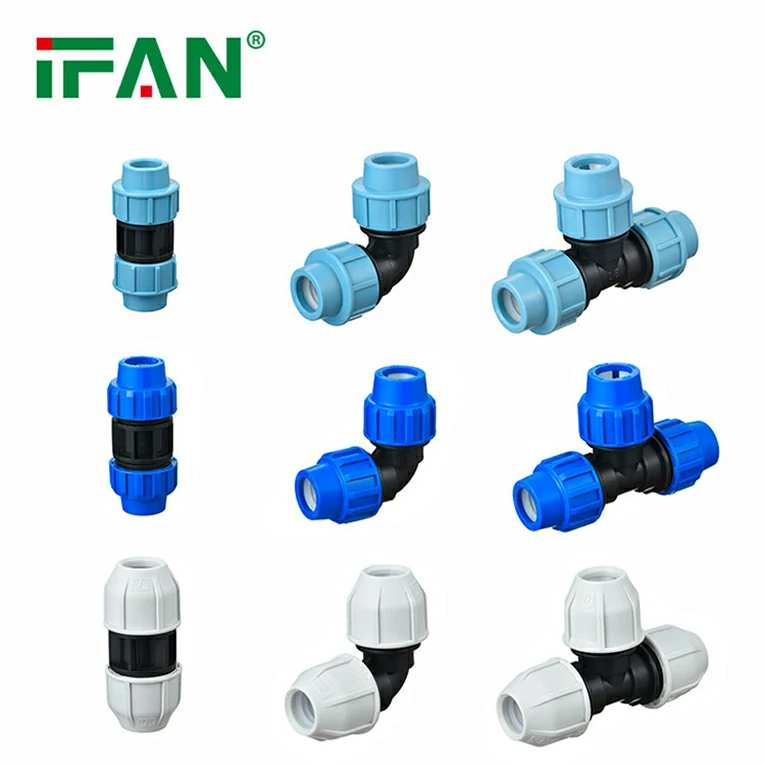
IFAN factory 30+ years manufacture experience support color /size customization support free sample.Welcome to consult for catalog and free samples.This is our Facebook Website:www.facebook.com,Click to watch IFAN's product video.Compared with Tomex products, our IFAN products from quality to price are your best choice, welcome to buy!
Recycling and Reuse of HDPE Pipe Fittings
Introduction
High - Density Polyethylene (HDPE) pipe fittings are widely used in various sectors, including water supply, drainage, gas distribution, and industrial applications, due to their excellent mechanical properties, chemical resistance, and durability. However, at the end of their service life, these fittings can pose environmental challenges if not properly managed. Recycling and reusing HDPE pipe fittings have become crucial practices to conserve resources, reduce waste, and minimize the environmental impact associated with plastic waste. This article explores the significance, processes, methods, challenges, and future prospects of recycling and reusing HDPE pipe fittings.

Importance of Recycling and Reusing HDPE Pipe Fittings
Resource Conservation
HDPE is derived from petroleum, a non - renewable resource. Recycling HDPE pipe fittings helps conserve these valuable resources by reducing the demand for virgin materials. Instead of extracting and processing new petroleum to produce HDPE, recycled materials can be used, extending the lifespan of the existing resource base. This not only reduces the environmental footprint associated with resource extraction but also contributes to long - term energy security and economic sustainability.
Waste Reduction
The accumulation of discarded HDPE pipe fittings in landfills takes up significant space and can persist for hundreds of years without proper degradation. By recycling and reusing these fittings, the amount of waste sent to landfills is substantially reduced. This helps alleviate the pressure on waste management infrastructure and reduces the potential for environmental contamination caused by leaching of harmful substances from plastic waste in landfills.
Environmental Protection
The production of virgin HDPE involves energy - intensive processes that contribute to greenhouse gas emissions and other forms of pollution. Recycling HDPE pipe fittings requires less energy compared to producing new ones, resulting in a lower carbon footprint. Additionally, reusing HDPE materials helps prevent the release of microplastics into the environment, which can have detrimental effects on ecosystems and human health. Overall, recycling and reuse play a vital role in protecting the environment and promoting sustainable development.
Recycling Process of HDPE Pipe Fittings
Collection and Sorting
The first step in recycling HDPE pipe fittings is collection. Used fittings are gathered from various sources, including construction sites, plumbing projects, and industrial facilities. After collection, the fittings are sorted based on their type, size, and quality. Sorting is essential to ensure that only compatible materials are processed together, which helps maintain the quality of the recycled product. Manual sorting may be combined with automated sorting technologies, such as optical sorting machines, to efficiently separate HDPE pipe fittings from other materials.
Cleaning and Shredding
Once sorted, the HDPE pipe fittings are thoroughly cleaned to remove dirt, debris, and any 残留的 substances from their surfaces. Cleaning can be done using water - based detergents or specialized cleaning agents. After cleaning, the fittings are shredded into small pieces or flakes. Shredding reduces the size of the fittings, making them easier to process in subsequent steps and increasing the surface area for further treatment.
Melting and Extrusion
The shredded HDPE pieces are then melted in an extruder at high temperatures. The melting process transforms the solid plastic into a molten state, allowing it to be processed and formed into new products. During melting, any impurities or contaminants that were not removed during the cleaning process can be further separated. The molten HDPE is then extruded into various forms, such as pellets, which serve as the raw material for manufacturing new HDPE products.
Reuse Methods of Recycled HDPE
Manufacturing New Pipe Fittings
One of the most common ways to reuse recycled HDPE is by manufacturing new pipe fittings. The recycled HDPE pellets can be processed using the same techniques as virgin HDPE, such as injection molding or extrusion. Newly produced pipe fittings made from recycled HDPE can meet specific quality standards and are suitable for a wide range of applications, including non - potable water supply, drainage systems, and some industrial fluid transportation. However, the quality of the recycled material may vary, and additional processing or blending with virgin HDPE may be required to ensure consistent performance.
Production of Other Plastic Products
Recycled HDPE can also be used to produce a variety of other plastic products. For example, it can be used to make plastic lumber, which is a durable and low - maintenance alternative to traditional wood for applications such as decking, fencing, and outdoor furniture. Additionally, recycled HDPE can be used in the production of plastic containers, crates, and packaging materials. These applications not only extend the lifespan of the recycled material but also reduce the demand for virgin plastics in these product categories.
Challenges in Recycling and Reusing HDPE Pipe Fittings
Contamination and Quality Control
Contamination is a major challenge in recycling HDPE pipe fittings. Fittings may come into contact with various substances during their service life, such as chemicals, oils, or other plastics, which can contaminate the recycled material. Even small amounts of contaminants can affect the quality and performance of the recycled HDPE, making it difficult to meet the required standards for new products. Ensuring strict quality control throughout the recycling process, from collection to the production of recycled products, is crucial but also requires significant investment in testing equipment and trained personnel.
Economic Viability
The economic viability of recycling and reusing HDPE pipe fittings can be a barrier. The cost of collection, transportation, cleaning, and processing recycled materials can sometimes be higher than the cost of producing new HDPE products from virgin materials, especially when considering factors such as economies of scale. Additionally, the market demand for recycled HDPE products may not be as strong as that for virgin products, which can make it challenging for recycling businesses to operate profitably. Government subsidies, incentives, and the development of a more robust market for recycled materials are needed to improve the economic viability of HDPE pipe fitting recycling.
Lack of Awareness and Infrastructure
There is often a lack of awareness among consumers, industries, and waste management providers about the importance and methods of recycling HDPE pipe fittings. This lack of awareness can lead to improper disposal of used fittings, reducing the availability of recyclable materials. Moreover, the recycling infrastructure for HDPE pipe fittings may be insufficient in many regions, with limited collection points, processing facilities, and transportation networks. Developing comprehensive recycling programs and improving the recycling infrastructure are essential to overcome these challenges.
Policy Support and Future Prospects
Policy and Regulatory Measures
Governments around the world are increasingly recognizing the importance of recycling and are implementing policies and regulations to promote the recycling and reuse of HDPE pipe fittings. These measures include setting recycling targets, providing financial incentives for recycling businesses, and imposing restrictions on the disposal of plastic waste in landfills. For example, some regions require a certain percentage of plastic products to be made from recycled materials, which stimulates the demand for recycled HDPE. Such policies play a crucial role in creating a favorable environment for the growth of the HDPE pipe fitting recycling industry.
Technological Advancements and Innovation
Ongoing research and development efforts are focused on improving the recycling and reuse of HDPE pipe fittings. New technologies are being developed to enhance the efficiency of the recycling process, improve the quality of recycled materials, and reduce costs. For example, advanced sorting technologies can more accurately separate HDPE from other plastics, and innovative processing methods can upgrade the quality of recycled HDPE to make it suitable for high - performance applications. Continued technological advancements and innovation hold great promise for the future of HDPE pipe fitting recycling, making it more sustainable and economically viable.
Conclusion
Recycling and reusing HDPE pipe fittings are essential practices for resource conservation, waste reduction, and environmental protection. Despite the challenges, such as contamination, economic viability, and lack of awareness and infrastructure, with the support of policies and the advancement of technology, the future of HDPE pipe fitting recycling looks promising. By promoting these practices, we can contribute to a more sustainable circular economy, where valuable resources are reused, and the environmental impact of plastic waste is minimized.