
IFAN factory 30+ years manufacture experience support color /size customization support free sample.Welcome to consult for catalog and free samples.This is our Facebook Website:www.facebook.com,Click to watch IFAN's product video.Compared with Tomex products, our IFAN products from quality to price are your best choice, welcome to buy!
1. Introduction: The Role of Pressure Resistance in Valve Performance
PVC ball valves are widely utilized across industrial, agricultural, and residential water systems due to their combination of lightweight design, corrosion resistance, and cost-effectiveness. However, one of the most critical performance factors for these valves is their ability to maintain structural integrity and leak-free operation under varying pressure conditions. Understanding the mechanisms behind pressure resistance and sealing integrity is essential for ensuring safe and efficient fluid control, particularly in systems that experience frequent pressure fluctuations or high operating loads.
2. Structural Design and Material Strength of PVC
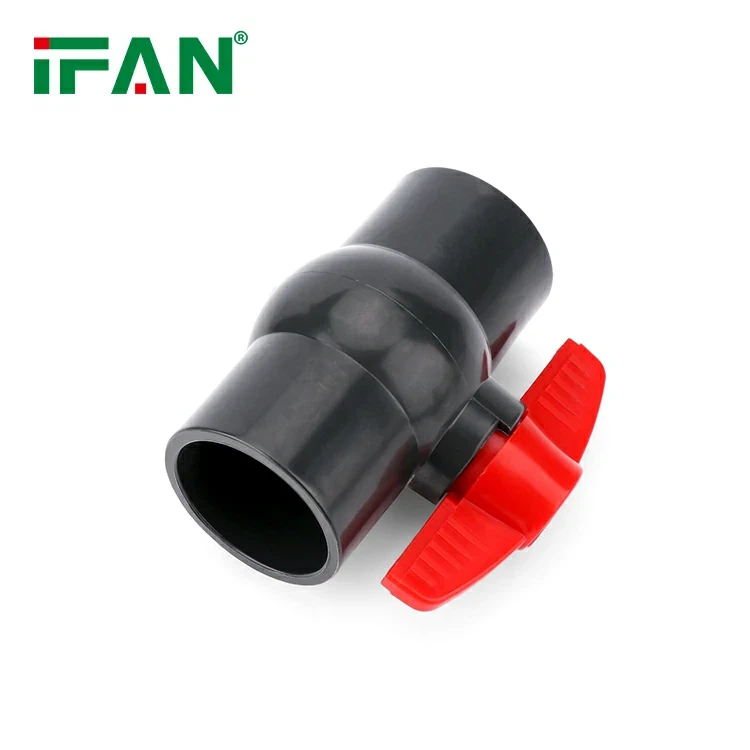
The pressure resistance of PVC ball valves largely depends on the material's mechanical properties and the precision of its design. Polyvinyl chloride (PVC) possesses a high modulus of elasticity and tensile strength, which allow it to withstand internal pressure without deforming. During manufacturing, the valve body is molded with uniform wall thickness and reinforced geometry to distribute stress evenly throughout the structure. The use of unplasticized PVC (uPVC) further enhances rigidity and pressure endurance, making these valves suitable for both medium- and high-pressure applications in irrigation, industrial fluid transport, and chemical distribution systems.
3. Sealing Mechanisms and O-Ring Performance
Sealing integrity in PVC ball valves is achieved through precisely engineered interfaces between the valve ball, seats, and O-rings. The valve's ball is typically made with a smooth, polished surface that fits snugly against elastomeric seals, ensuring zero leakage under static and dynamic conditions. High-quality elastomers such as EPDM or FKM are commonly used for O-rings, providing excellent resilience against pressure-induced deformation and chemical exposure. This tight sealing system not only prevents water loss but also eliminates backflow or pressure drops that could compromise overall system performance.
4. Pressure Testing and Quality Assurance Standards
To ensure long-term reliability, PVC ball valves undergo rigorous pressure and leak testing during production. Standardized protocols such as ISO 9393, ASTM D2467, and DIN 3230 outline the testing methods for verifying hydrostatic pressure resistance and sealing performance. Valves are typically tested at 1.5 times their rated pressure to confirm that no deformation, cracking, or leakage occurs. This process validates both the mechanical strength of the valve body and the elasticity of the sealing components. Manufacturers that adhere to these standards ensure that each valve can perform consistently under challenging real-world conditions, such as fluctuating pump pressures or sudden water hammer effects.
5. Long-Term Durability and Maintenance Benefits
Over time, consistent sealing performance under pressure ensures operational stability and reduces maintenance costs. Unlike metal valves that can experience seal degradation due to corrosion or scaling, PVC valves maintain their sealing properties even after years of use. The non-corrosive nature of PVC prevents surface oxidation, which helps preserve the precision contact between the ball and seals. Additionally, the lightweight construction minimizes stress on the piping system, further enhancing longevity. For users, this translates into reduced downtime, reliable system performance, and improved cost efficiency across the valve's service life.
Conclusion
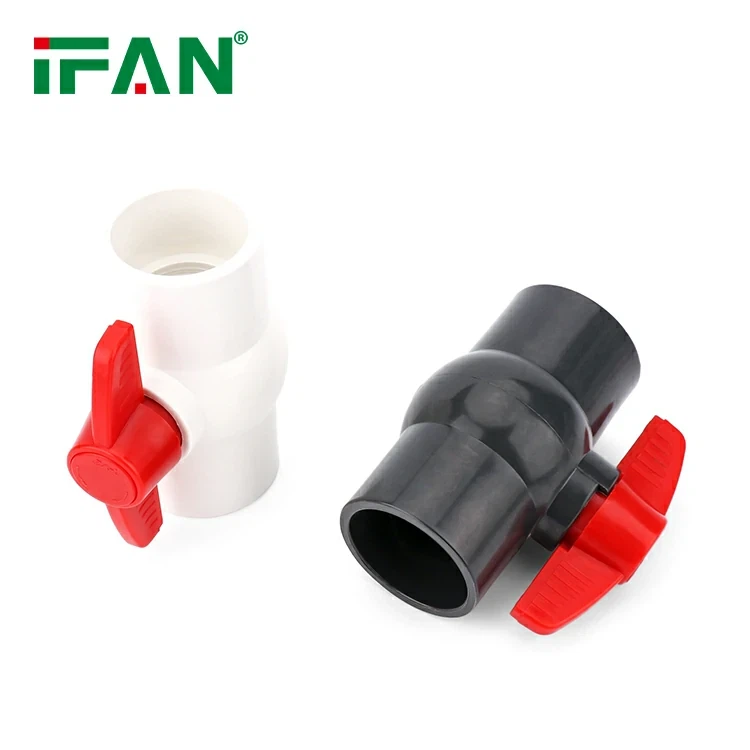
The pressure resistance and sealing integrity of PVC ball valves are central to their success in modern fluid management systems. Through robust structural design, high-grade materials, and strict quality testing, these valves deliver dependable performance even under demanding pressure conditions. Their ability to combine durability with leak-free operation makes them an ideal choice for industries seeking long-term, maintenance-free solutions. As advancements in material science and precision molding continue, PVC ball valves will remain a cornerstone of reliable and efficient pressure control across a wide range of applications.