
Material Code of Stainless Steel Press Fittings: Outstanding Advantages of 304/316L Stainless Steel
1. Introduction: Overview of 304/316L Stainless Steel in Press Fittings
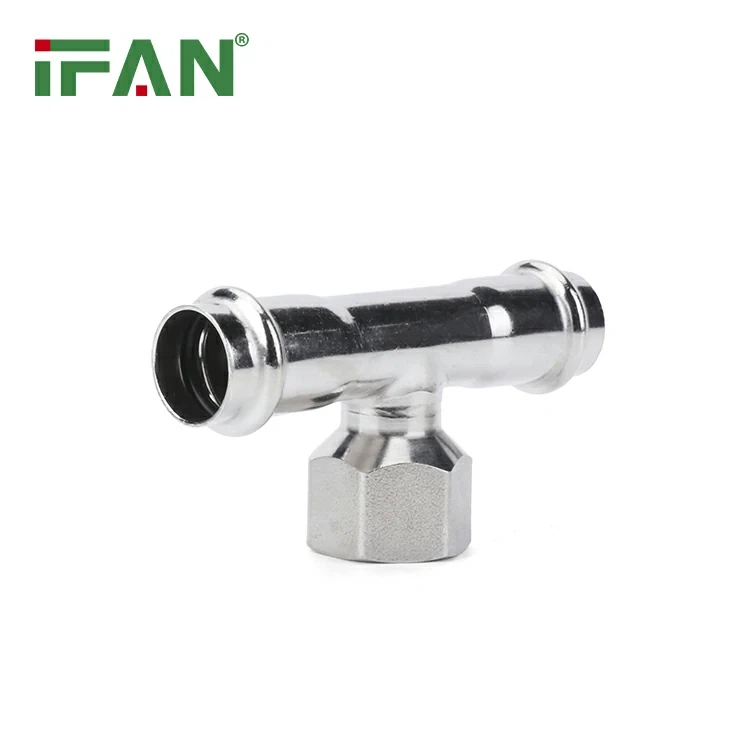
Stainless steel press fittings have become indispensable components in modern plumbing, heating, and industrial piping systems, owing to their reliable connection performance, long service life, and excellent adaptability. Among the various stainless steel materials used for press fittings, 304 and 316L are the most widely applied, with their unique material codes representing specific chemical compositions and mechanical properties that lay the foundation for their outstanding performance. The material code of stainless steel press fittings is not merely a marking but a guarantee of quality and performance, reflecting the strict standards followed in the material selection and production process. 304 stainless steel, typically designated by material codes such as EN 1.4301 or ASTM A240, and 316L stainless steel, coded as EN 1.4404 or ASTM A240/A480, are favored by industries worldwide for their superior characteristics. This article will delve into the outstanding advantages of these two materials, explaining why they have become the preferred choices for stainless steel press fittings.
2. Excellent Corrosion Resistance: The Core Advantage of 304/316L Stainless Steel
Corrosion resistance is the primary advantage that distinguishes 304/316L stainless steel from other materials, and it is also a key factor in ensuring the long-term stable operation of press fittings. 304 stainless steel contains approximately 18% chromium and 8% nickel, which form a dense chromium oxide passive film on the surface. This film can effectively isolate the material from the external corrosive environment, preventing oxidation and corrosion. It performs well in most common media, such as fresh water, air, and weak acids, making it suitable for residential and commercial plumbing systems. 316L stainless steel, on the other hand, is an upgraded version of 304, with the addition of 2-3% molybdenum in its chemical composition. Molybdenum enhances the material's resistance to pitting corrosion and crevice corrosion, especially in harsh environments containing chloride ions, such as seawater, coastal areas, and industrial wastewater. The "L" in 316L indicates low carbon content (≤0.03%), which further improves the material's resistance to intergranular corrosion, ensuring that the press fittings maintain structural integrity even after welding or high-temperature processing. The excellent corrosion resistance of 304/316L stainless steel significantly reduces the risk of pipe leakage and extends the service life of the piping system.
3. Superior Mechanical Properties: Ensuring Reliable Connection of Press Fittings
The reliable connection performance of stainless steel press fittings relies heavily on the excellent mechanical properties of 304/316L stainless steel. Both materials possess high tensile strength, yield strength, and ductility, which enable the fittings to withstand the pressure of the pressing process without cracking or deformation, ensuring a tight and leak-proof connection with the pipe. 304 stainless steel has a tensile strength of 515-720 MPa and a yield strength of ≥205 MPa, while 316L stainless steel has a tensile strength of 485-680 MPa and a yield strength of ≥170 MPa. Although 316L has slightly lower strength than 304 due to its low carbon content, it has better ductility and toughness, making it more suitable for applications that require bending or forming. In addition, 304/316L stainless steel has good fatigue resistance, which allows the press fittings to withstand repeated pressure fluctuations in the piping system without fatigue failure. These superior mechanical properties ensure that the press fittings can maintain stable performance under various working conditions, from low-pressure residential water supply to high-pressure industrial fluid transmission.
4. Wide Application Adaptability: Meeting Diverse Industry Needs
The outstanding performance of 304/316L stainless steel makes press fittings made of these materials highly adaptable to a wide range of application scenarios. In the construction industry, 304 stainless steel press fittings are widely used in domestic water supply, heating, and air conditioning systems due to their cleanliness and corrosion resistance. They are non-toxic and do not release harmful substances, ensuring the safety of drinking water. In the marine and offshore industries, 316L stainless steel press fittings are the first choice because they can resist the corrosive effect of seawater and salt spray, ensuring the reliability of the ship's piping system. In the chemical and pharmaceutical industries, where the medium is often corrosive (such as acids, alkalis, and organic solvents), 316L stainless steel press fittings can maintain stable performance, avoiding contamination of the medium and ensuring the quality of products. In addition, 304/316L stainless steel press fittings are also suitable for food processing, dairy, and beverage industries, as they are easy to clean and meet the strict hygiene standards of these industries. The wide application adaptability of 304/316L stainless steel press fittings makes them an important part of various industrial and civil piping systems.
5. Environmental Friendliness and Cost-Effectiveness: Sustainable Advantages in Long-Term Use
In addition to performance advantages, 304/316L stainless steel press fittings also have significant environmental friendliness and cost-effectiveness. Stainless steel is a 100% recyclable material, and 304/316L stainless steel can be fully recycled without reducing its performance, which reduces the consumption of natural resources and the generation of environmental waste. Compared with other materials such as plastic or copper, stainless steel press fittings do not release harmful substances during production, use, or recycling, conforming to the global trend of green and sustainable development. In terms of cost-effectiveness, although the initial investment of 304/316L stainless steel press fittings is higher than that of some traditional materials, their long service life (usually 50 years or more) and low maintenance costs make them more cost-effective in the long run. They do not require frequent replacement or anti-corrosion treatment, which reduces the overall operating costs of the piping system. For industries that require high reliability and long-term operation, such as water supply and sewage treatment, the cost-effectiveness of 304/316L stainless steel press fittings is particularly prominent.

6. Conclusion: The Irreplaceable Role of 304/316L Stainless Steel in Press Fittings
In summary, 304/316L stainless steel, with their specific material codes and superior performance, have become the mainstream materials for stainless steel press fittings. Their outstanding advantages, including excellent corrosion resistance, superior mechanical properties, wide application adaptability, and environmental friendliness and cost-effectiveness, make them irreplaceable in various industrial and civil piping systems. The material code of stainless steel press fittings is a symbol of quality and reliability, and choosing 304/316L stainless steel press fittings means choosing a safe, stable, and sustainable piping solution. With the continuous development of industrial technology and the increasing demand for high-quality piping systems, the application prospects of 304/316L stainless steel press fittings will become even broader, making greater contributions to the improvement of infrastructure construction and industrial production efficiency.