
IFAN factory 30+ years manufacture experience support color /size customization support free sample.Welcome to consult for catalog and free samples.This is our Facebook Website:www.facebook.com,Click to watch IFAN's product video.Compared with Tomex products, our IFAN products from quality to price are your best choice, welcome to buy!
Fault Diagnosis and Quick Repair Guide for Brass Gate Valve
Introduction
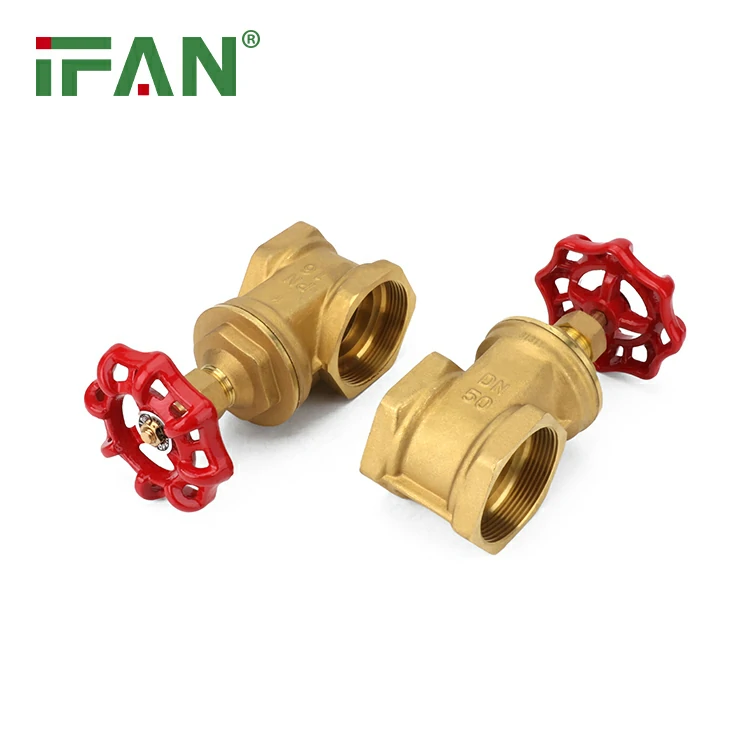
Brass gate valves are workhorses in fluid systems, but like any mechanical component, they can develop faults that compromise performance. Timely diagnosis and proper repair of these issues are crucial to maintaining system integrity, preventing leaks, and avoiding costly downtime. This comprehensive guide outlines the most common faults in brass gate valves, provides step-by-step diagnostic procedures, and offers practical repair solutions. Whether for residential water systems or industrial applications, this guide equips operators and maintenance professionals with the knowledge to address valve issues effectively.
Common Faults and Symptoms
Sealing Failures
Stem Leakage: Dripping from the stem packing gland, often caused by worn packing or a damaged gland nut. A 1-inch valve may leak 5-10 drops per minute, wasting up to 500 liters per day.
Bonnet Joint Leakage: Seepage between the valve body and bonnet, typically due to loose bolts or a deteriorated gasket. Visible wet spots around the bonnet indicate this fault.
Seat Leakage: Inability to stop flow when fully closed, shown by continuous flow through the valve. This may result from debris on the seat, wear, or damage to the gate or seat ring.
Operational Difficulties
Stuck Gate: Inability to open or close the valve, often due to mineral deposits, corrosion, or misalignment. A stuck gate in a 2-inch valve may require 50% more torque than normal to operate.
Excessive Torque: Unusually high force needed to turn the handwheel, caused by galling on the stem threads, seized packing, or a misaligned gate.
Noisy Operation: Grinding or rattling sounds during actuation, typically from loose internal components, debris in the flow path, or worn guides.
Structural Issues
Body Corrosion: Pitting or thinning of the valve body, especially in corrosive media. A 30% thickness loss in the body wall signals a critical safety risk.
Cracked Bonnet: Visible cracks in the bonnet, often due to excessive torque during installation or thermal stress. A cracked bonnet in a high-pressure system can lead to catastrophic failure.
Broken Stem: Complete failure of the stem, preventing actuation. This is a rare but severe fault, usually caused by over-torquing or material fatigue.
Diagnostic Procedures
Visual Inspection
Leak Detection: Apply soapy water to potential leak points (stem, bonnet, connections). Bubbles indicate leaks; a 1-mm leak in the seat can produce 20 bubbles per minute at 6 bar.
Corrosion Assessment: Examine the valve body, bonnet, and stem for surface corrosion. Use a magnifying glass to identify pitting (depth >0.5 mm requires attention).
Physical Damage: Look for cracks, deformations, or missing components. A cracked gate may show visible gaps when the valve is closed.
Functional Testing
Actuation Test: Cycle the valve through full open and closed positions, measuring torque with a torque wrench. Normal torque for a 1-inch valve should be <15 ft-lb; exceeding 25 ft-lb indicates a problem.
Seat Tightness Test: Close the valve and apply 1.1× rated pressure to the inlet. Allow 5 minutes; pressure drop >0.5 bar suggests seat leakage.
Hydrostatic Pressure Test: For critical valves, perform a shell test at 1.5× rated pressure. Any visible leakage during the 15-minute test requires immediate repair.
Advanced Diagnostics
Ultrasonic Testing: Use an ultrasonic leak detector to identify small leaks (down to 0.01 mm gaps) that are not visible. Frequency range 20-100 kHz is optimal for valve testing.
Infrared Thermography: Detect temperature anomalies indicating hidden leaks or excessive friction. A hot stem (50°C above ambient) may signal seized packing.
Thickness Gauging: Use an ultrasonic thickness meter to measure wall thickness. A reading <80% of the original thickness requires valve replacement.
Quick Repair Strategies
Stem Leakage Solutions
Tighten Packing Gland: Turn the gland nut 1/4 turn clockwise (max 2 ft-lb for 1-inch valves). If leakage persists, proceed to packing replacement.
Replace Packing:
Remove the gland nut and old packing (typically braided PTFE).
Lubricate new packing with silicone grease and install in 1/4-inch layers, ensuring each layer is seated properly.
Tighten the gland nut gradually, alternating sides to avoid misalignment.
Seat Leakage Remedies
Remove Debris: Open the valve, inspect the seat and gate for debris (scale, rust, particles). Use a soft brush or cloth to clean; avoid abrading the seat surface.
Lap the Seat: For minor wear (surface roughness Ra >1.6μm), use 600-grit lapping compound:
Apply compound to the seat, insert the gate, and rotate 10-15 times in each direction.
Rinse thoroughly and check for a uniform matte finish (Ra <1.0μm).
Replace Seat Ring: For severe damage, remove the old seat (press-fit or screwed) and install a new one. Ensure proper alignment and torque to manufacturer specs (e.g., 15 ft-lb for a 1-inch seat).
Stuck Gate Recovery
Loosen and Lubricate: Apply penetrating oil (e.g., WD-40) to the stem and around the bonnet. Wait 30 minutes, then try actuating with a lever extension (max 3× normal torque).
Remove and Clean: If stuck, disassemble the valve:
Remove the bonnet, inspect the gate and guides for corrosion or deposits.
Use a wire brush (brass for brass components) to clean, then apply anti-seize compound (copper-based) to moving parts.
Reassemble, ensuring the gate moves freely before reinstalling.
Emergency Repairs
Temporary Sealing for Body Leaks: Use epoxy putty (rated for 10 bar, 150°C) on small leaks. Clean the area, apply putty, and cure for 2 hours before restoring pressure.
Freeze Sealing for Non-Potable Systems: Use dry ice or CO₂ to freeze the pipe section ( -78°C) upstream of the valve, allowing temporary repair without system depressurization.
Preventive Maintenance and Longevity
Routine Maintenance Schedule
Monthly Check:
Inspect for leaks, tighten packing gland if necessary (max 1/4 turn).
Lubricate stem threads with food-grade grease (2-3 drops for 1-inch valves).
Annual Service:
Disassemble the valve, clean all components with solvent.
Inspect seat and gate for wear, lap if needed (Ra >1.6μm).
Replace packing and gasket, even if not leaking.
Biennial Testing:
Perform hydrostatic test at 1.5× rated pressure for 15 minutes.
Check dimensional stability with calipers (body OD variation >0.5% requires attention).
Corrosion Prevention
Anti-Corrosion Coatings: Apply zinc-rich primer (80% zinc content) to external surfaces in corrosive environments. Reapply every 2-3 years.
Dielectric Unions: Install between brass valves and dissimilar metals to prevent galvanic corrosion. A dielectric union reduces corrosion by 75% in mixed-metal systems.
Water Treatment: Adjust pH to 7.5-8.5 in soft water systems to promote protective scale formation, reducing corrosion rates by 60%.
Operational Best Practices
Avoid Partial Opening: Operate valves fully open or closed to minimize turbulent flow and seat wear. Partial opening (30-70%) increases wear by 4 times compared to full positions.
Control Pressure Surges: Install surge tanks or pressure relief valves to limit transients to ≤1.3× rated pressure. A PN16 valve should withstand 20.8 bar surges.
Thermal Management: Allow for thermal expansion (0.15 mm/100 mm length) with flexible hoses or expansion joints in systems with >50°C temperature variation.
Case Studies in Fault Resolution
Residential Water Valve Repair
Fault: 1-inch brass valve with stem leakage (10 drops/min) in a hard water system.
Diagnosis: Worn PTFE packing, minor scale on the stem.
Repair: Replaced packing with graphite-impregnated PTFE, cleaned stem with vinegar solution.
Outcome: Leakage stopped; valve operated smoothly for 3 more years.
Industrial Steam Valve Recovery
Fault: 2.5-inch valve in a steam line (180°C, 8 bar) with seat leakage (15 kg/h steam loss).
Diagnosis: PTFE seat deformed by high temperature, metal-to-metal contact damage.
Repair: Replaced with graphite-impregnated PTFE seat, lapped the gate surface.
Outcome: Leakage reduced to <1 kg/h; annual energy savings of $3,500.
Marine Valve Corrosion Remedy
Fault: 3-inch valve in seawater with body pitting (depth 0.8 mm, original thickness 4 mm).
Diagnosis: Chloride-induced pitting corrosion, galvanic corrosion from steel piping.
Repair: Replaced with aluminum-brass valve, installed dielectric unions, applied epoxy coating (500 μm).
Outcome: Corrosion rate dropped from 0.1 mm/year to <0.01 mm/year over 5 years.
Advanced Tools and Future Trends
Smart Diagnostic Aids
IoT-Enabled Valve Monitors: Wireless sensors that track torque, temperature, and leakage, sending alerts to a mobile app when anomalies are detected. Predicted to reduce downtime by 40%.
AR Repair Guides: Augmented reality apps that overlay repair steps onto the valve, guiding technicians through disassembly and replacement.
Advanced Repair Technologies
Cold Spray Coatings: Used to repair minor pitting (depth <1 mm) by depositing a brass powder coating at supersonic speeds, restoring wall thickness without heat damage.
3D-Printed Replacement Parts: On-site printing of valve components (e.g., packing glands, small seats) using brass filament, reducing repair lead times by 80%.
Self-Healing Materials
Microencapsulated Coatings: Seats and stems coated with microcapsules that release corrosion inhibitors or lubricants when damaged, repairing minor wear (up to 0.1 mm) autonomously.

Conclusion
Effective fault diagnosis and quick repair of brass gate valves require a systematic approach to identify issues, implement appropriate solutions, and prevent future problems. By following the procedures outlined in this guide, maintenance professionals can address common faults efficiently, extending valve life and ensuring safe operation. As technology advances, smart diagnostics and advanced repair techniques will further enhance the reliability and maintainability of brass gate valves, reducing downtime and operational costs in fluid systems worldwide.