
IFAN factory 30+ years manufacture experience support color /size customization support free sample.Welcome to consult for catalog and free samples.This is our Facebook Website:www.facebook.com,Click to watch IFAN's product video.Compared with Tomex products, our IFAN products from quality to price are your best choice, welcome to buy!
PVC (Polyvinyl Chloride) pipe fittings are widely used across residential, commercial, and industrial sectors. One of the most important distinctions within PVC fittings is whether they are designed for pressure or non-pressure systems. Understanding the difference between these two types of fittings is essential for selecting the right components for your plumbing, irrigation, or fluid transport applications. This article explores the core differences, applications, and key considerations.
1. What Are Pressure PVC Fittings?
Designed to Withstand Internal Pressure
Pressure PVC fittings are specifically engineered to carry fluids or gases under pressure. These fittings are tested and rated to handle certain pressure levels, often marked in PSI (pounds per square inch) or bars. You'll typically find pressure fittings in municipal water systems, industrial chemical transport, and sprinkler irrigation systems.
They come in various schedules, such as Schedule 40 or Schedule 80, which define wall thickness and corresponding pressure capacity. For example, Schedule 80 fittings have thicker walls and can handle higher pressures than Schedule 40. Pressure fittings are also more robust in their design, with reinforced socket ends or threaded connections to prevent leaks under pressure.
2. What Are Non-Pressure PVC Fittings?
Ideal for Drainage, Waste, and Vent Applications
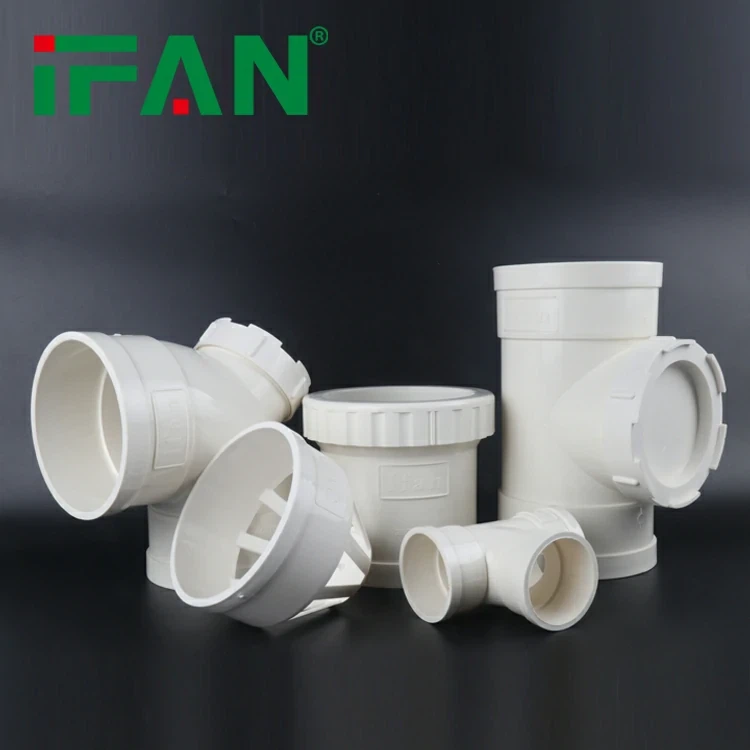
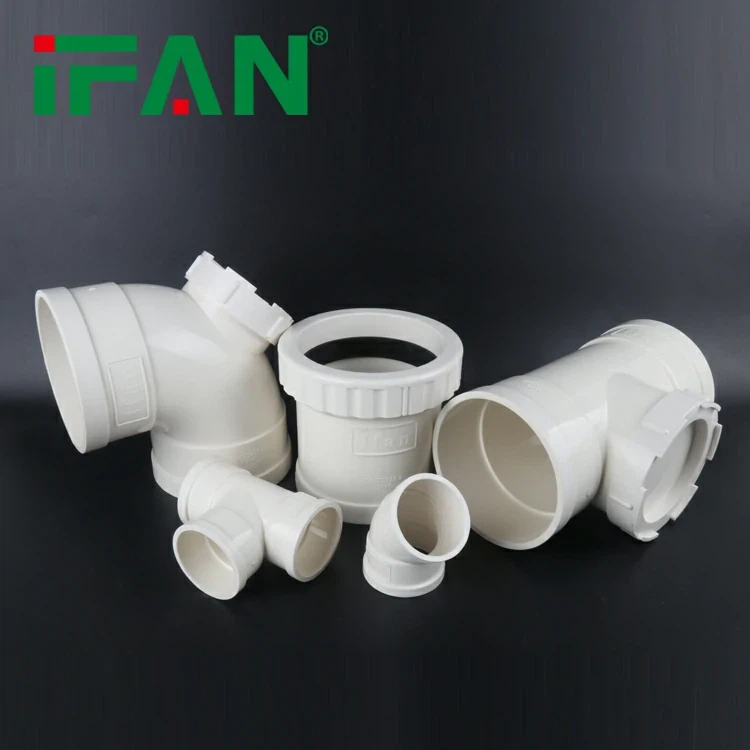
Non-pressure PVC fittings, often called DWV (Drain, Waste, and Vent) fittings, are used where fluid or gas moves due to gravity rather than pressure. These fittings are commonly seen in residential sewer lines, roof vent systems, or industrial waste lines.
They are generally lighter and more cost-effective because they don't need to resist internal pressure. Their design focuses on smooth interior surfaces to prevent blockages and ease of installation. While they can withstand some incidental pressure (such as a surge from a toilet flush), they're not rated for sustained internal pressure.
3. Visual and Dimensional Differences
Shape, Wall Thickness, and Markings
The most apparent difference between the two types of fittings lies in their shape and markings. Pressure fittings tend to have square or beveled shoulders with visible pressure ratings marked on their body. Non-pressure DWV fittings often have long sweep bends and are not marked with pressure specifications.
Wall thickness is another key indicator. Pressure-rated fittings will have noticeably thicker walls, especially in Schedule 80 versions. This makes them heavier and more durable for demanding installations, whereas DWV fittings are lighter and often more economical for short-term or low-risk applications.
4. Application-Based Selection Criteria
Choosing the Right Fitting for the Job
Selecting between pressure and non-pressure PVC fittings should be based on the intended use. For any system involving pumps, pressurized water, or high-volume fluid flow, pressure fittings are essential to ensure long-term durability and safety. This includes applications like potable water delivery, industrial fluid handling, and irrigation systems.
Non-pressure fittings are perfect for drainage systems where water flows due to gravity. However, using non-pressure fittings in a pressurized system can lead to failures such as cracking, leaking, or system breakdown, which may result in costly repairs or health hazards.
5. Cost, Availability, and Compliance Considerations
Balancing Budget with Performance Needs
Non-pressure PVC fittings are generally cheaper due to their lower material requirements and simpler manufacturing. They are also widely available at home improvement and plumbing supply stores. Pressure fittings, while more expensive, offer peace of mind through higher strength and longer service life.
In regulated environments-such as municipal water systems or chemical processing plants-only pressure-rated fittings will meet code and compliance requirements. Always check local plumbing codes or consult with an engineer when in doubt.
Conclusion
Understanding the difference between pressure and non-pressure PVC fittings can save time, money, and potential system failures. Pressure fittings are engineered for high-strength, long-term pressurized applications, while non-pressure fittings are optimized for gravity-fed systems like drains and vents. Whether you're a homeowner planning a small repair or a contractor designing a full-scale piping system, making the correct choice between these two types of fittings is crucial for a safe and reliable outcome.