
IFAN factory 30+ years manufacture experience support color /size customization support free sample.Welcome to consult for catalog and free samples.This is our Facebook Website:www.facebook.com,Click to watch IFAN's product video.Compared with Tomex products, our IFAN products from quality to price are your best choice, welcome to buy!
Analysis of the Hydrodynamic Performance and Pipeline Resistance of White Color PPR Pipe Fittings
In fluid conveyance systems, the hydrodynamic performance of pipe fittings and the resulting pipeline resistance are crucial factors that determine the efficiency, energy consumption, and overall functionality of the system. White color PPR (Polypropylene Random) pipe fittings, widely used in various residential, commercial, and industrial applications, exhibit unique characteristics that significantly influence their hydrodynamic behavior and the resistance within the pipeline. This analysis delves into the key aspects that shape the hydrodynamic performance and pipeline resistance of these fittings.
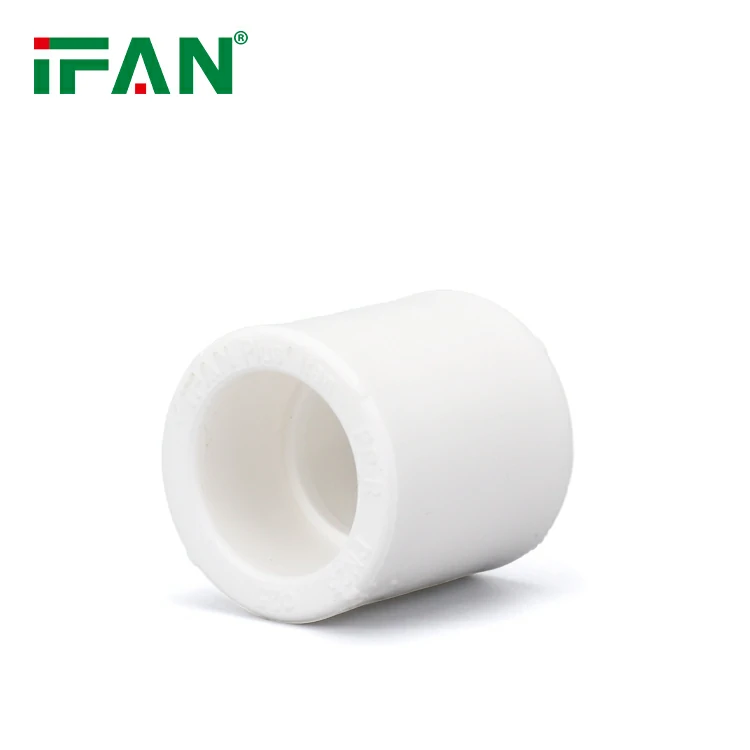
Inner Wall Smoothness and Friction Reduction
The smoothness of the inner wall of white color PPR pipe fittings is a primary determinant of their hydrodynamic performance. PPR fittings are manufactured with high - precision molds, resulting in an extremely smooth internal surface. Unlike metal pipes that may have rough surfaces due to rust, scale, or manufacturing imperfections, PPR fittings minimize the friction between the flowing fluid and the pipe wall.
When fluid flows through a pipe, friction causes energy losses, which in turn increases the pipeline resistance. A smooth inner wall reduces this frictional force, allowing the fluid to flow more freely. According to the Darcy - Weisbach equation, which is used to calculate the head loss due to friction in pipes, the friction factor is directly related to the roughness of the pipe wall. With a lower friction factor resulting from the smooth inner surface of PPR fittings, the head loss is reduced, and the overall energy consumption of the fluid conveyance system decreases. This enhanced flow efficiency is particularly beneficial in large - scale industrial applications where a significant amount of fluid needs to be transported over long distances.
Geometric Design and Flow Patterns
The geometric design of white color PPR pipe fittings also plays a vital role in their hydrodynamic performance. Fittings such as elbows, tees, and reducers are designed with specific shapes and angles to optimize fluid flow. For example, well - designed elbows with smooth, gradual curves minimize the disruption of the fluid flow compared to sharp - angled elbows. When fluid passes through a sharp - angled elbow, it creates turbulence and eddies, increasing the pipeline resistance.
In contrast, PPR elbows with a proper radius of curvature ensure a more laminar flow pattern, reducing the formation of vortices and minimizing energy losses. Similarly, tees are engineered to distribute the fluid flow evenly, with carefully calculated angles and internal geometries that prevent flow separation and excessive resistance. The precise geometric design of PPR pipe fittings helps maintain a stable and efficient flow regime, contributing to better hydrodynamic performance and lower pipeline resistance in complex pipeline networks.
Joint Connection and Leak - Free Operation
The connection between white color PPR pipe fittings and pipes is another aspect that impacts hydrodynamic performance and pipeline resistance. PPR fittings are typically joined to pipes using heat fusion or electro - fusion methods, which create strong, seamless joints. A leak - free connection is essential for maintaining the integrity of the fluid flow and preventing any unnecessary energy losses.
Leaks in the pipeline system not only result in fluid loss but also disrupt the flow pattern, causing turbulence and increasing resistance. High - quality PPR pipe fittings, when properly installed, ensure a tight seal at the joints, allowing the fluid to flow continuously without any interruptions. Additionally, the uniform diameter and smooth transition at the joint areas further enhance the flow characteristics, reducing the likelihood of flow disturbances that could contribute to increased pipeline resistance.
Impact of Fluid Properties on Resistance
The hydrodynamic performance and pipeline resistance of white color PPR pipe fittings are also influenced by the properties of the fluid being transported. Different fluids have varying viscosities, densities, and flow rates, all of which interact with the fittings and affect the overall resistance within the pipeline.
For instance, a fluid with a higher viscosity, such as oil, will experience greater resistance when flowing through the same PPR pipe fittings compared to a low - viscosity fluid like water. The design and material properties of PPR fittings, however, still play a role in minimizing this resistance. The smooth inner surface helps reduce the frictional forces acting on the more viscous fluid, while the geometric design ensures that the flow remains as efficient as possible. Understanding the relationship between fluid properties and pipeline resistance is crucial for optimizing the performance of PPR pipe fittings in different applications.

Comparison with Other Pipe Fitting Materials
When analyzing the hydrodynamic performance and pipeline resistance of white color PPR pipe fittings, it is also valuable to compare them with fittings made from other materials. Metal fittings, such as those made from iron or copper, often have higher roughness values due to corrosion and scale formation over time, leading to increased friction and greater pipeline resistance.
PVC fittings, although smoother than metal ones, may have limitations in terms of geometric design and joint connection quality compared to PPR fittings. PPR's superior manufacturing precision, combined with its excellent material properties, allows it to offer better hydrodynamic performance and lower pipeline resistance in many cases. This makes PPR pipe fittings a preferred choice for applications where efficient fluid flow and energy conservation are essential.
In conclusion, the hydrodynamic performance and pipeline resistance of white color PPR pipe fittings are influenced by multiple factors, including inner wall smoothness, geometric design, joint connection quality, fluid properties, and comparisons with other materials. By understanding these aspects, engineers, installers, and users can make informed decisions to optimize the performance of fluid conveyance systems, reduce energy consumption, and ensure the efficient and reliable operation of pipelines.