

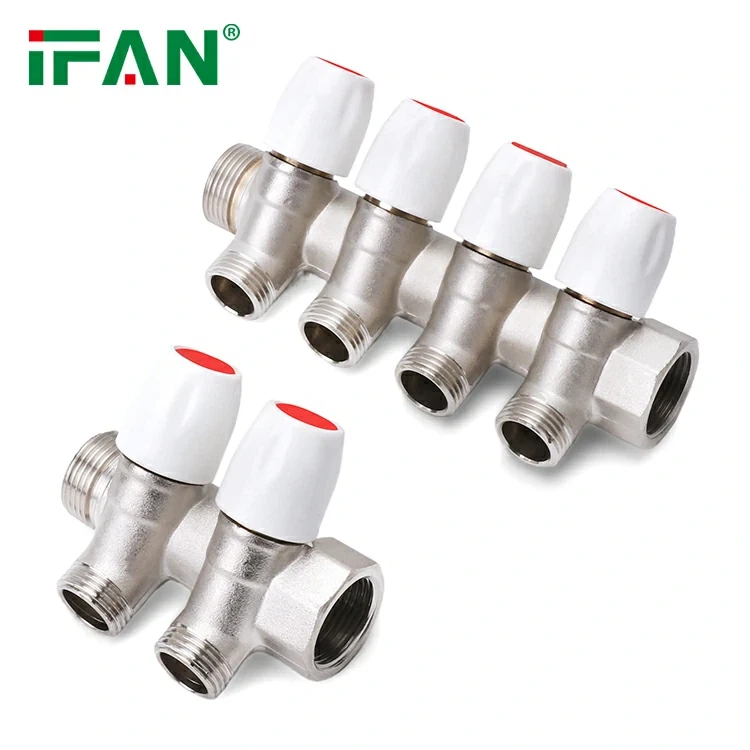
Standard Quality Simple Brass Manifolds
IFAN factory 30+ years manufacture experience support color /size customization support free sample.Welcome to consult for catalog and free samples.This is our Facebook Website:www.facebook.com,Click to watch IFAN's product video.Compared with Tomex products, our IFAN products from quality to price are your best choice, welcome to buy!
The Long-Term Value of Corrosion Resistance of Brass Manifold in Underfloor Heating Systems
Introduction
Underfloor heating systems have become a popular choice for providing efficient and comfortable heating in residential and commercial buildings. At the core of these systems, the brass manifold plays a crucial role in distributing and regulating the flow of heated water. Among the many properties of brass manifolds, corrosion resistance stands out as a key factor that significantly impacts the long - term performance, reliability, and cost - effectiveness of underfloor heating systems. This article will explore the long - term value of the corrosion resistance of brass manifolds in underfloor heating systems, covering aspects such as its importance, the mechanism of corrosion resistance, the benefits it brings, influencing factors, and future development trends.

Importance of Corrosion Resistance in Underfloor Heating Manifolds
Ensuring System Integrity
In underfloor heating systems, the manifold is constantly in contact with water, which may contain dissolved oxygen, minerals, and other substances that can cause corrosion. Corrosion can lead to the weakening of the manifold's structure, resulting in leaks, cracks, and ultimately, system failures. A corroded manifold not only disrupts the heating process but can also cause water damage to the building structure, leading to costly repairs. The corrosion resistance of brass manifolds is essential for maintaining the integrity of the underfloor heating system over an extended period, ensuring that the heated water is properly distributed without the risk of leaks or structural damage.
Preventing Contamination
Corrosion of the manifold can release metal ions and other contaminants into the water flow. These contaminants can accumulate in the pipes, valves, and other components of the underfloor heating system, reducing their efficiency and lifespan. For example, the presence of rust particles from a corroded manifold can clog small - diameter pipes, restrict water flow, and increase pressure drops. By preventing corrosion, brass manifolds help maintain the cleanliness of the water in the system, protecting other components from damage and ensuring the smooth operation of the entire underfloor heating setup.
Long-Term Reliability
A corrosion - resistant brass manifold contributes to the long - term reliability of the underfloor heating system. In a building with a long - term occupancy, such as a residential home or a commercial office, the heating system is expected to operate consistently for decades. A manifold that is prone to corrosion will require frequent repairs or replacements, leading to disruptions in heating and increased maintenance costs. In contrast, a brass manifold with excellent corrosion resistance can withstand the harsh conditions of the underfloor heating environment for many years, providing reliable performance and peace of mind for the building owners and occupants.
Mechanism of Corrosion Resistance in Brass Manifolds
Alloy Composition
Brass is an alloy primarily composed of copper and zinc. Copper, which is the main component, has inherent corrosion - resistant properties. When exposed to air and water, copper forms a thin, adherent layer of copper oxide on its surface. This oxide layer acts as a protective barrier, preventing further oxidation and corrosion of the underlying metal. Zinc, the other significant component in brass, also plays a crucial role. Zinc is more electrochemically active than copper, so in the presence of an electrolyte (such as water), zinc will corrode preferentially, sacrificing itself to protect the copper. This sacrificial corrosion mechanism further enhances the overall corrosion resistance of brass, making it highly suitable for use in underfloor heating manifolds where exposure to water is continuous.
Surface Passivation
In addition to the alloy composition, brass can undergo surface passivation, which further improves its corrosion resistance. Passivation occurs when the surface of the brass reacts with oxygen in the air or water to form a stable, passive film. This film is extremely thin but highly effective in preventing the ingress of corrosive substances into the metal. The passive film can self - repair when damaged, ensuring that the brass manifold remains protected even under conditions that may cause minor surface abrasion or scratching. This self - healing property of the passive film contributes to the long - term durability and corrosion resistance of brass manifolds in underfloor heating systems.
Long-Term Benefits of Brass Manifold Corrosion Resistance
Cost Savings
One of the most significant long - term values of the corrosion resistance of brass manifolds is the cost savings it offers. Since brass manifolds are less prone to corrosion, they require fewer repairs and replacements over their lifespan. The cost of replacing a corroded manifold includes not only the cost of the new manifold but also the labor costs associated with disassembling the old one and installing the new one. In addition, corrosion - related leaks can cause water damage to the building, resulting in additional repair costs for floors, walls, and other structures. By choosing corrosion - resistant brass manifolds, building owners can avoid these costly repairs and replacements, reducing the overall lifecycle cost of the underfloor heating system.
Energy Efficiency Preservation
A corroded manifold can disrupt the smooth flow of water in the underfloor heating system, leading to increased pressure drops and reduced flow rates. When the water flow is restricted, the system has to work harder to maintain the desired heating temperature, consuming more energy. In contrast, a corrosion - resistant brass manifold ensures that the water flows freely and efficiently through the system. This allows the underfloor heating system to operate at its optimal efficiency, reducing energy consumption and lowering heating bills over the long term. Moreover, by preserving the energy efficiency of the system, brass manifolds also contribute to environmental sustainability by reducing greenhouse gas emissions associated with energy production.
Enhanced Comfort and Convenience
A reliable underfloor heating system with a corrosion - resistant brass manifold provides enhanced comfort and convenience for building occupants. Without the risk of leaks or system failures due to corrosion, the heating system can operate continuously and consistently, maintaining a stable indoor temperature. This eliminates the discomfort caused by sudden temperature drops or uneven heating. Additionally, the reduced need for maintenance and repairs means less disruption to the daily lives of the occupants. Building owners can enjoy the benefits of a trouble - free heating system, providing a more comfortable and convenient living or working environment.
Influencing Factors on the Corrosion Resistance of Brass Manifolds
Water Quality
The quality of the water used in the underfloor heating system has a significant impact on the corrosion resistance of brass manifolds. Water with high levels of dissolved oxygen, chlorides, sulfates, or other aggressive ions can accelerate the corrosion process. For example, chloride ions can penetrate the protective oxide layer on the brass surface, initiating localized corrosion such as pitting. Hard water, which contains high concentrations of calcium and magnesium salts, can also form scale deposits on the manifold surface. These scale deposits can trap corrosive substances and create a micro - environment that promotes corrosion. Therefore, maintaining good water quality through proper water treatment, such as deoxygenation, softening, and filtration, is essential for preserving the corrosion resistance of brass manifolds.
Temperature and Humidity
Temperature and humidity also play important roles in the corrosion of brass manifolds. Higher temperatures can increase the rate of chemical reactions, including corrosion. In underfloor heating systems, the heated water can reach relatively high temperatures, which can accelerate the corrosion process if other factors are not properly controlled. Humidity in the surrounding environment can also contribute to corrosion, especially if there are leaks or condensation around the manifold. Moisture provides the necessary electrolyte for electrochemical corrosion to occur. Therefore, ensuring proper insulation of the manifold and maintaining a dry environment around it can help mitigate the effects of temperature and humidity on corrosion.
Maintenance and Future Development Trends
Maintenance Practices
To maximize the long - term value of the corrosion resistance of brass manifolds, proper maintenance is essential. Regular inspection of the manifold for signs of corrosion, such as discoloration, pitting, or leaks, should be carried out. If any signs of corrosion are detected, appropriate measures should be taken immediately, such as cleaning the affected area, applying protective coatings, or replacing the damaged parts. Additionally, maintaining good water quality through regular water testing and treatment is crucial. Flushing the underfloor heating system periodically to remove any accumulated contaminants can also help prevent corrosion.
Future Development Trends
As technology continues to advance, there is a growing focus on further enhancing the corrosion resistance of brass manifolds. Researchers are exploring new alloy compositions and surface treatment techniques to improve the corrosion - resistant properties of brass. For example, the addition of small amounts of other elements, such as tin, aluminum, or nickel, to the brass alloy may further enhance its corrosion resistance. New surface coating technologies, such as nanocoatings, are also being developed to provide an additional layer of protection against corrosion. These advancements in materials and coating technologies will not only extend the lifespan of brass manifolds but also increase their long - term value in underfloor heating systems.
Conclusion
The corrosion resistance of brass manifolds is of immense long - term value in underfloor heating systems. It ensures the integrity, reliability, and efficiency of the system, while also providing significant cost savings, energy efficiency benefits, and enhanced comfort for building owners and occupants. Understanding the mechanism of corrosion resistance, the factors that influence it, and implementing proper maintenance practices are key to maximizing this value. With ongoing research and development in materials and surface treatment technologies, the future looks promising for even more corrosion - resistant brass manifolds, further improving the performance and sustainability of underfloor heating systems.
Hot Tags: standard quality simple brass manifolds, China, suppliers, manufacturers, factory, wholesale, cheap, discount, low price, in stock, free sample, Gas PEX AL PEX Pipe, Plastic PPR Pipe, PPR Fitting Socket, PEX AL PEX Pipe Overlap, Brass Valve, PPR Fitting Female Tee
Send Inquiry
