

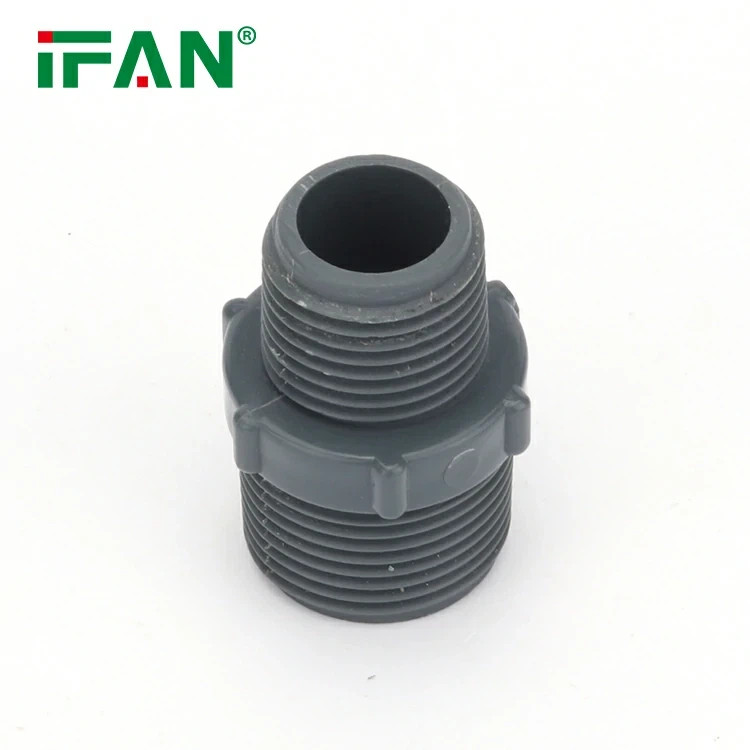
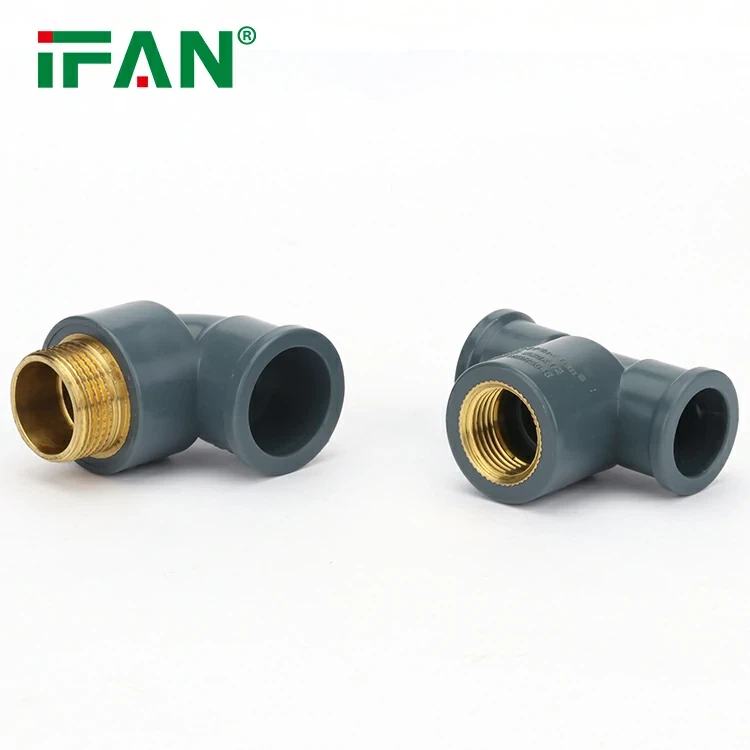
UPVC Tube Fitting Accessories
IFAN factory 30+ years manufacture experience support color /size customization support free sample.Welcome to consult for catalog and free samples.This is our Facebook Website:www.facebook.com,Click to watch IFAN's product video.Compared with Tomex products, our IFAN products from quality to price are your best choice, welcome to buy!
Oil Resistance of UPVC Pipe Fittings Material
Introduction
Unplasticized Polyvinyl Chloride (UPVC) is a widely used thermoplastic material in the manufacturing of pipe fittings across multiple industries. In applications where pipe fittings come into contact with oils, such as in automotive fuel systems, industrial lubrication pipelines, and some petrochemical processes, the oil resistance of UPVC pipe fittings material becomes a critical factor. Understanding how UPVC behaves in the presence of different types of oils, the factors influencing its oil resistance, and the methods to evaluate and enhance this property is essential for ensuring the reliability, safety, and longevity of piping systems. This article will comprehensively explore the oil resistance of UPVC pipe fittings material, covering its significance, mechanisms, performance, influencing factors, and practical applications.
Significance of Oil Resistance in UPVC Pipe Fittings
Ensuring System Integrity
In oil - related applications, any degradation or failure of pipe fittings due to oil exposure can lead to leaks, which pose significant risks. Leaks can result in oil spills, causing environmental pollution, potential fire hazards, and disruptions to industrial processes. By having good oil resistance, UPVC pipe fittings can maintain their structural integrity, preventing such catastrophic failures. For example, in an industrial plant's lubrication system, if UPVC pipe fittings are used, their ability to resist the lubricating oil ensures a continuous and safe flow of the oil, lubricating machinery components effectively without the worry of leakage.
Protecting Equipment and Machinery
Oils are often used to lubricate, cool, or transfer power in various equipment and machinery. If the pipe fittings transporting these oils are not resistant to them, the integrity of the oil can be compromised. UPVC pipe fittings with adequate oil resistance safeguard the quality of the oil, preventing any unwanted chemical reactions between the oil and the pipe material. This, in turn, protects the equipment that depends on the oil for proper operation, reducing the likelihood of equipment damage and costly maintenance or replacements.
Cost - effectiveness
Long - lasting, oil - resistant UPVC pipe fittings offer cost - effectiveness. Although there may be an initial investment in selecting high - quality, oil - resistant UPVC products, it is offset by the reduced need for frequent replacements and repairs caused by oil - induced degradation. In large - scale projects, such as oil refineries or automotive manufacturing facilities, the savings from using reliable, oil - resistant UPVC pipe fittings can be substantial over the long term.
Mechanisms of Oil Resistance in UPVC
Molecular Structure and Non - polarity
The molecular structure of UPVC contributes to its oil resistance. UPVC consists of long chains of polyvinyl chloride with a backbone of carbon - carbon (C - C) bonds and chlorine atoms attached to the carbon atoms. The material has a relatively non - polar nature, which limits its interaction with polar oils. Polar oils, such as some synthetic lubricants with polar additives, have a lower affinity for the non - polar UPVC surface, reducing the chances of the oil penetrating and causing swelling or degradation. Additionally, the strong covalent bonds within the UPVC polymer chains, especially the carbon - chlorine (C - Cl) bonds with high bond energy, make it difficult for oil molecules to break these bonds and initiate chemical reactions with the material.
Physical Barrier
During the manufacturing process, UPVC forms a dense and continuous structure, acting as a physical barrier against oil penetration. The tightly packed polymer chains create a tortuous path for oil molecules, making it challenging for them to diffuse into the interior of the pipe fittings. This physical barrier, combined with the chemical properties of UPVC, provides a two - layer defense mechanism against oil - related degradation, enhancing the overall oil resistance of the material.
Performance of UPVC Pipe Fittings Against Different Types of Oils
Mineral Oils
UPVC generally shows good resistance to mineral oils, which are commonly used in lubrication and fuel applications oils, composed. Mineral mainly of hydrocarbons, have a non - polar nature similar to UPVC in many aspects. As a result, they have limited interaction with the UPVC material, and UPVC pipe fittings can withstand exposure to mineral oils without significant swelling, softening, or chemical degradation. This makes UPVC a suitable choice for applications involving the transportation and storage of mineral - based lubricants and fuels in some industrial and automotive settings.
Synthetic Oils
The performance of UPVC against synthetic oils varies depending on the specific composition of the synthetic oil. Some synthetic oils, especially those with polar components or special additives, may interact more strongly with UPVC. For example, certain synthetic lubricants formulated for high - performance applications might contain polar additives to enhance their lubricating properties. These additives can potentially penetrate UPVC, causing swelling or a decrease in mechanical strength over time. However, there are also synthetic oils that UPVC can resist effectively, and the key lies in understanding the chemical makeup of both the oil and the UPVC formulation.
Vegetable Oils
Vegetable oils, which are becoming more popular in some applications due to their renewable nature, can also pose challenges to UPVC. Some vegetable oils may contain fatty acids and other components that can interact with UPVC. Prolonged exposure to certain vegetable oils can lead to swelling of UPVC pipe fittings, as the oil molecules penetrate the material and disrupt the intermolecular forces. However, the extent of degradation depends on factors such as the type of vegetable oil, its concentration, and the temperature of the environment.
Factors Influencing the Oil Resistance of UPVC Pipe Fittings
Temperature
Temperature significantly impacts the oil resistance of UPVC. As the temperature rises, the kinetic energy of both the oil molecules and the UPVC polymer chains increases. This higher energy can facilitate the penetration of oil into the UPVC matrix and accelerate any potential chemical reactions. At elevated temperatures, UPVC may become more susceptible to swelling and degradation when exposed to oils, even those it would normally resist at lower temperatures. For example, in an automotive engine compartment where temperatures can be high, the oil resistance of UPVC pipe fittings used in fuel lines needs to be carefully considered.
Oil Concentration and Contact Duration
The concentration of the oil and the duration of contact also play crucial roles. Higher concentrations of oil can increase the rate of penetration into UPVC and the likelihood of chemical reactions. Similarly, longer contact times allow more opportunity for the oil to interact with the UPVC material, potentially leading to more significant degradation. In industrial applications where UPVC pipe fittings are in constant contact with high - concentration oils over extended periods, the risk of oil - induced damage is higher, and appropriate precautions need to be taken.
Additives and Formulation
The additives used in the formulation of UPVC can greatly influence its oil resistance. Stabilizers, which are commonly added to improve the overall stability of UPVC, may also have an impact on how the material responds to oil exposure. Some additives can modify the surface properties of UPVC, making it more or less receptive to oil penetration. Additionally, the type and amount of fillers, impact modifiers, and other components in the UPVC formulation can affect its oil resistance. A well - formulated UPVC with carefully selected additives can exhibit enhanced oil resistance compared to a standard formulation.
Evaluation Methods for Oil Resistance of UPVC Pipe Fittings
Immersion Tests
Immersion tests are a standard method for evaluating the oil resistance of UPVC pipe fittings. In this test, samples of UPVC are fully immersed in the target oil at a controlled temperature for a specific period. After the immersion, the samples are inspected for changes in appearance, such as swelling, discoloration, and surface texture. Mechanical properties, including tensile strength, impact resistance, and dimensional stability, are also measured to assess the extent of degradation caused by the oil. By comparing the properties of the samples before and after immersion, the oil resistance of UPVC can be quantitatively evaluated.
Vapor Exposure Tests
For volatile oils or situations where pipe fittings are exposed to oil vapors, vapor exposure tests are conducted. Samples of UPVC are placed in a chamber filled with the oil vapor at a specific temperature and humidity. Similar to immersion tests, the samples are examined for any signs of degradation, such as changes in appearance and mechanical properties, after a set exposure time. Vapor exposure tests help simulate real - world conditions where UPVC pipe fittings may be exposed to oil vapors, providing valuable insights into their oil resistance in such environments.
Practical Applications and Precautions
Applications
Despite the challenges, UPVC pipe fittings are still used in some oil - related applications where the oil type and operating conditions are favorable. In certain low - pressure lubrication systems in industrial machinery, where the oil is mineral - based and the temperature and pressure are within acceptable limits, UPVC can be a cost - effective option. Additionally, in some experimental or small - scale setups involving oils that UPVC is known to resist, it can be used as a viable material for pipe fittings.
Precautions
When considering using UPVC pipe fittings in oil - related applications, several precautions should be taken. It is essential to thoroughly understand the chemical composition of the oil and its compatibility with UPVC. Conducting compatibility tests before large - scale installation is advisable. Temperature control in the operating environment should be optimized to minimize the negative impact on UPVC's oil resistance. If there is a risk of exposure to oils that UPVC may not resist well, alternative materials or protective measures, such as using liners or coatings, should be considered to ensure the safety and reliability of the piping system.
Conclusion
The oil resistance of UPVC pipe fittings material is a complex and crucial property in various industrial and practical applications. While UPVC has inherent mechanisms that provide resistance to certain types of oils, its performance can be affected by multiple factors, including temperature, oil type, concentration, and formulation. Through proper evaluation methods and understanding of these influencing factors, engineers and designers can make informed decisions about the use of UPVC pipe fittings in oil - related systems. By taking appropriate precautions and considering alternative solutions when necessary, the potential of UPVC in oil - handling applications can be maximized, ensuring the safe, reliable, and cost - effective operation of piping systems. Future research and development may lead to improved UPVC formulations with enhanced oil resistance, further expanding its applications in the oil - related industries.
Hot Tags: upvc tube fitting accessories, China, suppliers, manufacturers, factory, wholesale, cheap, discount, low price, in stock, free sample, PEX Sliding Fitting, Floor Drain, PPR Fitting Female, PEXC Floor Heating PEX Pipe, Hose, Green Plastic PPR Pipe
Send Inquiry
