
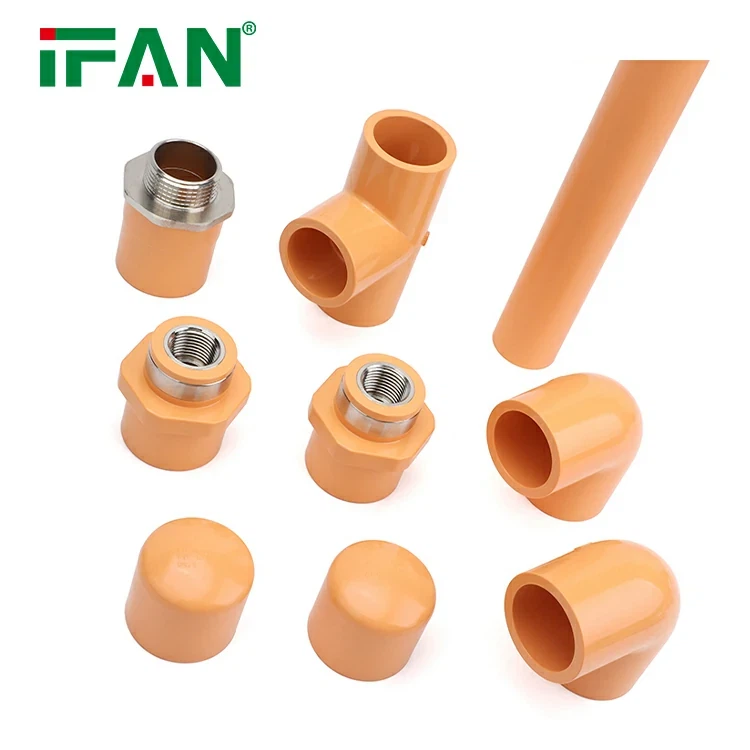
CPVC Injection Fitting
IFAN factory 30+ years manufacture experience support color /size customization support free sample.Welcome to consult for catalog and free samples.This is our Facebook Website:www.facebook.com,Click to watch IFAN's product video.Compared with Tomex products, our IFAN products from quality to price are your best choice, welcome to buy!
The Effect of Density and Wall Thickness on CPVC Performance
Introduction: Why Density and Wall Thickness Matter
Chlorinated Polyvinyl Chloride (CPVC) has become a trusted material in piping systems due to its exceptional heat resistance, corrosion immunity, and mechanical strength. However, two often-overlooked factors-density and wall thickness-play a critical role in determining the overall performance and lifespan of CPVC pipes and fittings. These parameters directly affect the pipe's strength, pressure rating, thermal stability, and even its installation characteristics. Understanding how density and wall thickness interact allows engineers and manufacturers to design CPVC systems optimized for specific applications, from residential plumbing to industrial chemical transport.
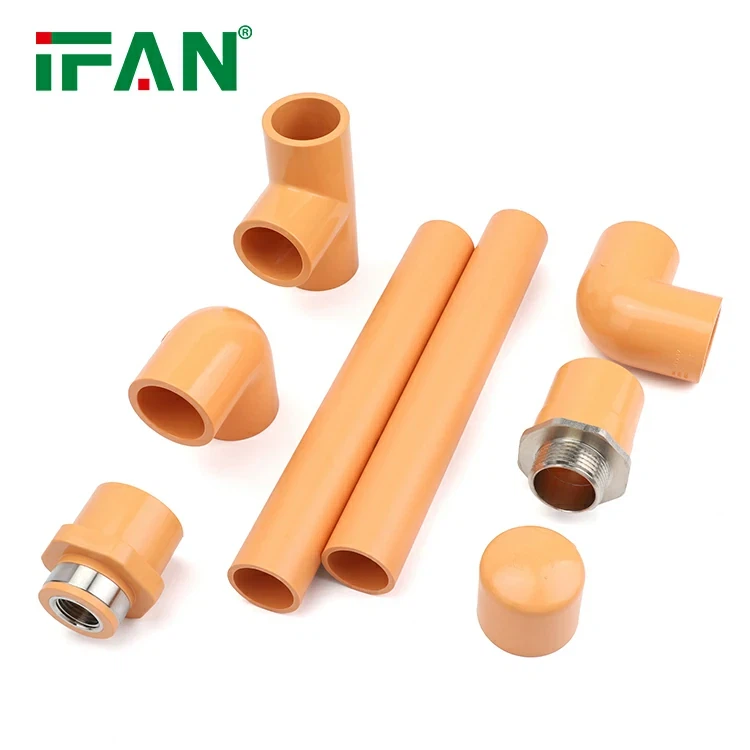
The Relationship Between Density and Mechanical Strength
Density in CPVC materials is a measure of how tightly the polymer chains are packed within the structure. Higher density generally translates to improved rigidity and compressive strength, which allows the pipe to withstand internal and external pressures more effectively. A denser CPVC matrix also reduces the likelihood of microvoids or weak spots forming during manufacturing. This structural compactness ensures consistent mechanical behavior under stress. However, density must be carefully controlled-excessive density may reduce impact resistance and flexibility, making the pipe more brittle in low-temperature environments. Manufacturers therefore balance molecular weight and chlorination levels to achieve optimal density that enhances both strength and durability.
Wall Thickness and Pressure Resistance
Wall thickness is one of the most critical design parameters in determining a CPVC pipe's pressure rating. Thicker walls provide greater resistance to internal pressure, minimizing the risk of bursting or deformation during service. In high-pressure applications, such as hot water systems or chemical transport lines, increased wall thickness ensures stability under both mechanical and thermal stress. Moreover, thicker walls enhance the pipe's ability to absorb impact during installation or handling, reducing potential cracking. Industry standards like ASTM F441 and ISO 15877 define specific wall thickness requirements for different pressure classes, ensuring that CPVC pipes perform safely across a wide range of conditions.
Thermal Expansion and Dimensional Stability
Both density and wall thickness influence CPVC's response to temperature changes. Pipes with higher density exhibit lower coefficients of thermal expansion, meaning they experience less elongation or contraction when exposed to temperature fluctuations. Similarly, thicker walls improve dimensional stability, reducing the risk of sagging or distortion under heat. In hot water systems, this stability prevents joint misalignment and leakage over time. Engineers often use these properties to design CPVC piping systems with fewer expansion joints or supports, simplifying installation while maintaining long-term reliability even in demanding thermal environments.
Impact on Flow Efficiency and Weight Considerations
While thicker walls enhance mechanical strength, they can also slightly reduce the internal diameter of the pipe, affecting flow efficiency. Engineers must balance wall thickness with hydraulic performance to ensure sufficient flow rates without excessive pressure drop. Likewise, higher-density CPVC materials can increase overall pipe weight, which may influence transportation and installation logistics. Advanced material formulations now allow manufacturers to maintain high density for strength while optimizing molecular design to reduce unnecessary weight. This balance ensures that CPVC piping systems remain both strong and lightweight, offering efficient installation and long-term performance.
Longevity and Cost Efficiency
Optimizing both density and wall thickness extends the lifespan of CPVC pipes by reducing wear, preventing deformation, and maintaining pressure resistance over decades of use. Properly designed CPVC systems resist creep, cracking, and thermal fatigue, leading to fewer maintenance requirements. From a cost perspective, using pipes with the correct density and thickness for the intended pressure class minimizes material waste while ensuring safety and reliability. Whether in residential, commercial, or industrial systems, this balance directly translates to lower lifecycle costs and greater operational efficiency.
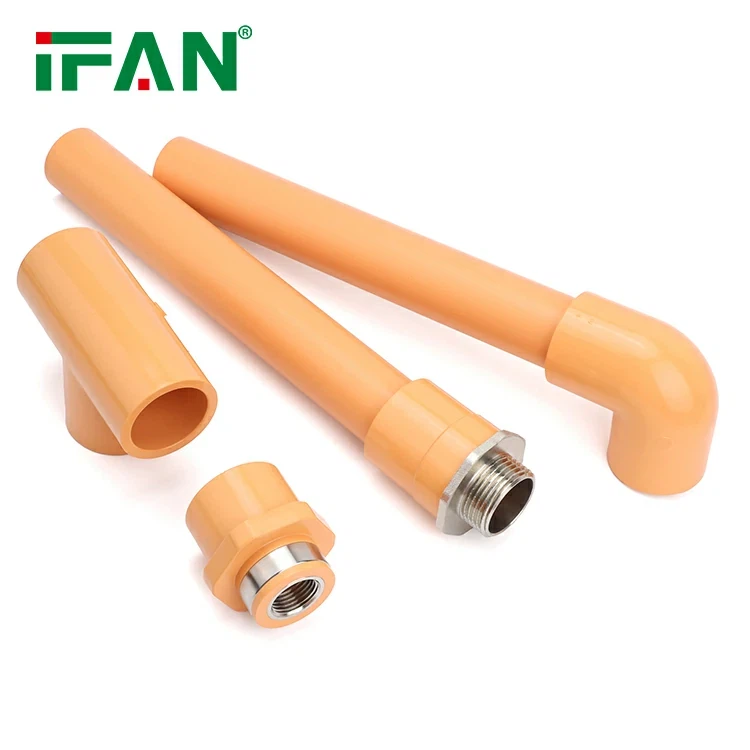
Conclusion: Engineering the Ideal CPVC System
The performance of CPVC piping systems depends heavily on precise control of density and wall thickness during material formulation and manufacturing. Together, they define how the pipe responds to pressure, heat, and mechanical stress. A well-balanced combination ensures that CPVC maintains its core advantages-thermal resistance, chemical inertness, and long-term stability-across diverse applications. For system designers and manufacturers, optimizing these parameters is key to achieving high-quality, efficient, and durable piping solutions that meet modern performance demands.
Hot Tags: cpvc injection fitting, China, suppliers, manufacturers, factory, wholesale, cheap, discount, low price, in stock, free sample
Send Inquiry
