
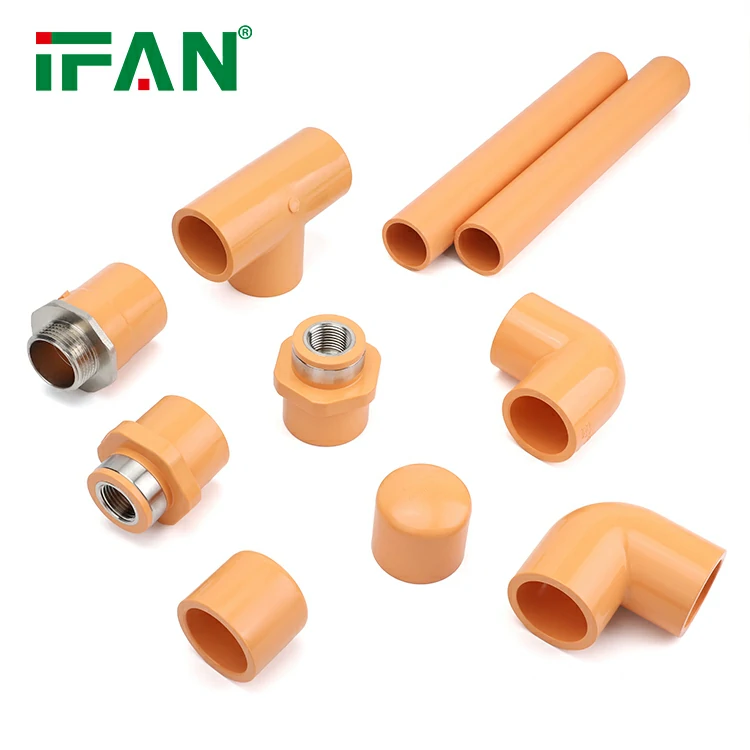
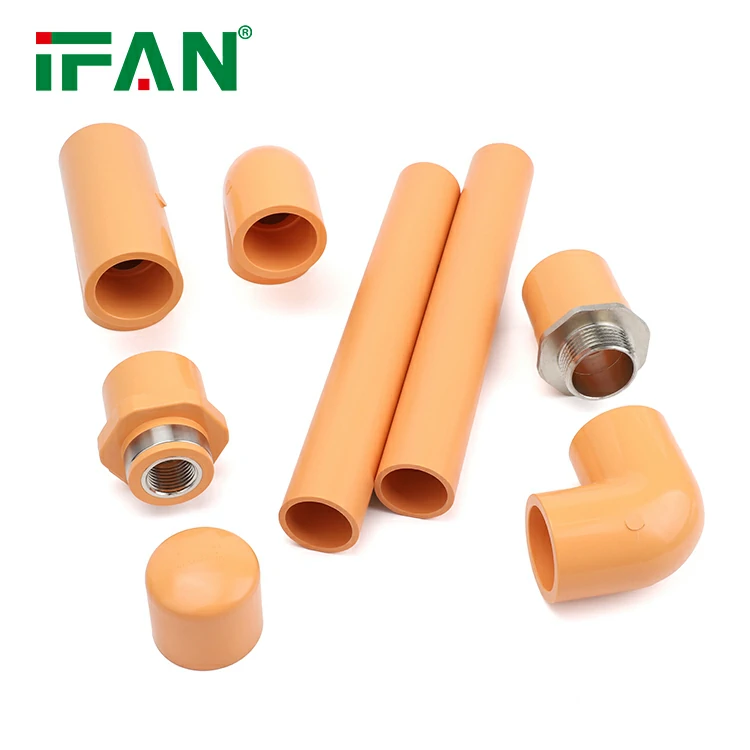
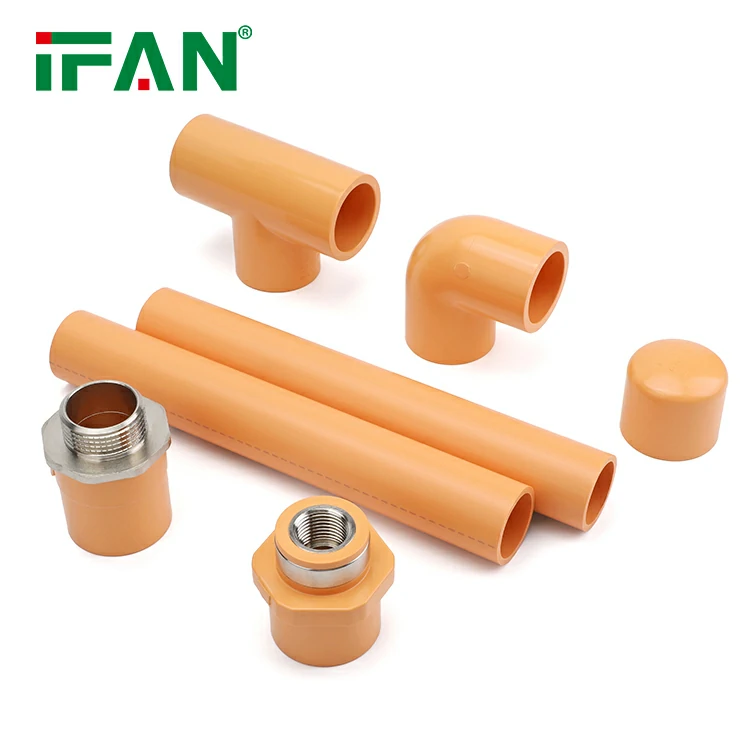
CPVC Fitting For Water Supply
IFAN factory 30+ years manufacture experience support color /size customization support free sample.Welcome to consult for catalog and free samples.This is our Facebook Website:www.facebook.com,Click to watch IFAN's product video.Compared with Tomex products, our IFAN products from quality to price are your best choice, welcome to buy!
The Science Behind CPVC's High Heat Resistance
Introduction: Why CPVC Excels Under High Temperatures
Chlorinated polyvinyl chloride (CPVC) is widely recognized for its ability to withstand elevated temperatures where traditional PVC and other thermoplastics would soften or deform. This exceptional heat resistance is one of the key reasons CPVC has become a preferred material for hot water distribution, industrial fluid handling, and fire sprinkler systems. But what gives CPVC this impressive capability? The answer lies in its unique molecular structure, manufacturing process, and material composition.
Molecular Structure: The Core of Thermal Stability
The foundation of CPVC's heat resistance begins with its chemical structure. CPVC is produced by chlorinating polyvinyl chloride (PVC), which increases the chlorine content from about 56% in PVC to between 63% and 69% in CPVC. This additional chlorine strengthens the molecular bonds between polymer chains, creating a more rigid and thermally stable structure. As a result, the glass transition temperature (Tg) of CPVC rises significantly, allowing it to retain strength and shape at temperatures that would cause PVC to soften or warp.
The Role of Chlorine in Heat Performance
Chlorine atoms play a critical role in enhancing CPVC's resistance to heat and combustion. These atoms create a strong barrier around the carbon backbone of the polymer chain, reducing molecular mobility and improving stability under thermal stress. When CPVC is exposed to high temperatures, the dense chlorine content slows down the rate of thermal decomposition, preventing early breakdown. Additionally, chlorine's presence contributes to CPVC's inherent flame retardancy, giving it a high limiting oxygen index (LOI) - meaning it requires more oxygen than air to sustain combustion.
Manufacturing Precision: Maintaining Thermal Integrity
The heat resistance of CPVC also depends on precise control during the chlorination and compounding processes. Manufacturers use controlled chlorination to ensure uniform chlorine distribution throughout the polymer, avoiding weak points that could compromise heat tolerance. Stabilizers and processing aids are then added to prevent degradation during extrusion or molding. These measures ensure that the final CPVC material maintains its molecular integrity, providing consistent performance across various temperature ranges - typically up to 93°C (200°F) for continuous service.
Comparison with Other Thermoplastics
When compared with standard PVC or other thermoplastics such as polypropylene (PP) and polyethylene (PE), CPVC's heat performance stands out. While PVC can handle temperatures up to around 60°C before softening, CPVC maintains mechanical strength and dimensional stability well beyond that range. Unlike PP or PE, which can deform under prolonged heat exposure, CPVC retains rigidity, making it suitable for both residential hot water and industrial chemical transport applications. This balance of strength, stability, and processability is what positions CPVC as a superior choice in high-temperature environments.
Conclusion: Engineering for Long-Term Thermal Reliability
CPVC's high heat resistance is not a coincidence-it's the result of precise chemical engineering and material science. Through increased chlorine content, enhanced molecular bonding, and meticulous production processes, CPVC achieves a level of thermal stability unmatched by many other plastics. This property ensures safe, reliable performance in demanding applications where heat, pressure, and chemical exposure are constant factors. As technology advances, CPVC continues to set the standard for thermal durability in modern piping and fluid transport systems.
Hot Tags: cpvc fitting for water supply, China, suppliers, manufacturers, factory, wholesale, cheap, discount, low price, in stock, free sample
Send Inquiry
