
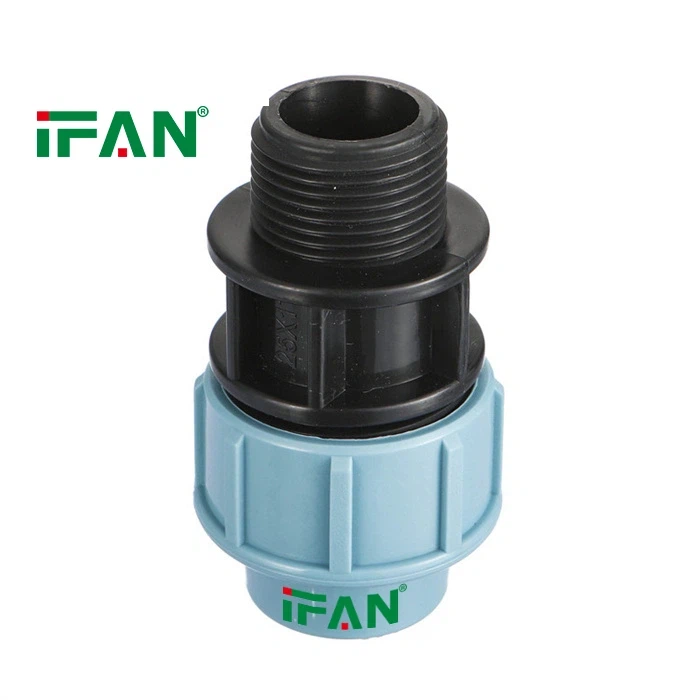
HDPE Fitting Manufacturer
Why Uniform Material Distribution Matters in HDPE Pipe Fittings
Introduction: The Role of Material Distribution in Fitting Performance
High-Density Polyethylene (HDPE) pipe fittings are widely used in modern pipeline systems because of their strength, flexibility, and resistance to corrosion. These fittings play a crucial role in connecting pipelines and ensuring smooth fluid transportation. While the inherent properties of HDPE contribute to its durability, the way the material is distributed within the fitting during manufacturing is equally important.
Uniform material distribution refers to the even dispersion of molten HDPE throughout the mold cavity during the molding process. When the polymer fills the mold evenly, the finished fitting achieves balanced wall thickness, stable structural integrity, and reliable mechanical performance. Maintaining this uniformity is essential for ensuring that HDPE pipe fittings perform consistently under various operating conditions.

Balanced Structural Strength
One of the primary reasons uniform material distribution matters is that it directly affects the structural strength of the fitting. If the molten HDPE material does not flow evenly during the injection process, certain areas of the fitting may become thinner or less dense than others.
These weak areas can reduce the overall strength of the fitting and may create potential failure points when the pipeline operates under internal pressure. In contrast, when the material is evenly distributed, the fitting maintains consistent wall thickness and balanced structural reinforcement throughout its body.
This balanced structure allows the fitting to withstand pressure fluctuations and mechanical stress more effectively.
Improved Pressure Resistance
HDPE pipeline systems often operate under continuous pressure, especially in water supply networks, industrial transport systems, and irrigation infrastructure. For pipe fittings to function reliably, they must be capable of handling internal pressure without deformation or damage.
Uniform material distribution ensures that the entire fitting body shares the pressure load evenly. When pressure is applied inside the pipeline, each section of the fitting experiences similar stress levels rather than concentrating stress in a single location.
This balanced stress distribution improves the pressure resistance of the fitting and reduces the likelihood of structural deformation during long-term operation.
Enhanced Durability and Long-Term Stability
Another benefit of uniform material distribution is improved long-term durability. Over time, pipeline systems are exposed to continuous pressure cycles, temperature variations, and environmental influences.
If a fitting contains areas with uneven density or inconsistent wall thickness, those sections may deteriorate faster under repeated stress. Micro-level weaknesses can gradually expand, eventually affecting the overall reliability of the pipeline system.
By maintaining uniform material distribution during manufacturing, the polymer structure remains consistent throughout the fitting, allowing it to resist long-term stress and environmental changes more effectively.
Better Fusion Connection Performance
HDPE pipe fittings are commonly installed using fusion methods such as butt fusion or electrofusion. These joining techniques rely on the melting and bonding of polyethylene surfaces to create a strong, leak-free connection.
Uniform material distribution helps ensure that the fusion surfaces of the fitting maintain consistent thickness and density. When the polymer structure is evenly distributed, the heating process during fusion occurs more uniformly across the contact area.
This uniform heating and bonding result in stronger, more reliable pipe joints, which are essential for maintaining leak-free pipeline systems.
Manufacturing Control for Uniform Distribution
Achieving uniform material distribution requires careful control during the manufacturing process. Factors such as mold design, injection pressure, temperature control, and cooling conditions all influence how the molten HDPE flows within the mold.
Modern injection molding technology allows manufacturers to optimize these parameters so that the polymer fills the mold cavity evenly. Well-designed mold channels guide the material smoothly, while controlled cooling ensures that the structure solidifies uniformly.
These manufacturing controls help produce HDPE pipe fittings with consistent internal structure and reliable mechanical performance.

Conclusion: A Key Factor in Reliable Pipeline Systems
Uniform material distribution is a fundamental aspect of high-quality HDPE pipe fittings. By ensuring balanced wall thickness, even structural reinforcement, and stable polymer density, manufacturers can produce fittings that deliver reliable pressure resistance and long-term durability.
In addition, uniform material distribution supports strong fusion connections and helps maintain the overall integrity of pipeline systems. Through precise manufacturing processes and careful quality control, HDPE pipe fittings can achieve the structural consistency required for modern infrastructure, water supply, and industrial fluid transportation networks.
Hot Tags: hdpe fitting manufacturer, China, suppliers, manufacturers, factory, wholesale, cheap, discount, low price, in stock, free sample
Send Inquiry
