
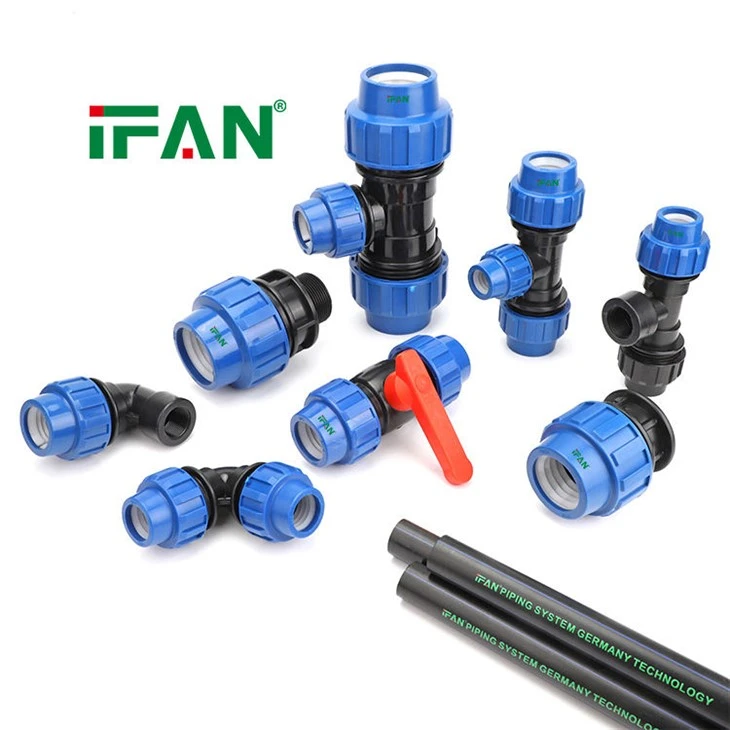
Compression Plastic Threaded Fittings
1. Introduction: Why Temperature and Pressure Ratings Matter
In any piping system-whether for water, gas, or chemical transport-temperature and pressure ratings are critical for system safety and longevity. Plastic compression fittings, widely used in plumbing, irrigation, and industrial applications, are designed to perform reliably under specific conditions. Knowing their operating limits ensures proper material selection, prevents failures, and supports efficient system design. This article explores the typical temperature and pressure capabilities of plastic compression fittings and factors that influence their performance.
2. Standard Pressure Ratings for Plastic Compression Fittings
Most plastic compression fittings, especially those made from polypropylene (PP) or polyethylene (PE), are rated for working pressures between 6 bar (87 psi) and 16 bar (232 psi), depending on their size, design, and material. For example:
PN10 fittings (10 bar or ~145 psi) are common in irrigation and residential plumbing.
PN16 fittings (16 bar or ~232 psi) are often used in municipal water supply systems.
These ratings refer to the maximum continuous pressure the fitting can handle at a given temperature, typically around 20°C (68°F).
3. Temperature Ranges and Limitations
Polypropylene (PP): up to 90°C short-term
High-density polyethylene (HDPE): suitable for cold water and low-heat systems
PVC: limited to about 60°C
These materials soften at higher temperatures, which can compromise sealing and mechanical strength. For hot water or chemical systems, selecting the correct plastic type is essential to ensure long-term reliability.
4. Application Considerations in Real-World Conditions
In field use, system pressure may fluctuate due to pump cycling, valve closures, or water hammer. Similarly, temperature may vary seasonally or during the day in outdoor installations. To ensure safety, it's recommended to:
Select fittings with a safety margin above expected operating pressure
Install pressure regulators to prevent sudden spikes
Use UV-stabilized materials for outdoor use where solar heat may increase pipe temperature
Proper installation and periodic inspection also contribute to maintaining system integrity under variable conditions.
5. Best Practices for Long-Term Durability
To maximize the lifespan and performance of plastic compression fittings:
Avoid overtightening, which can damage the threads or deform the sealing components
Use fittings within their rated limits for both temperature and pressure
Ensure proper pipe insertion depth and alignment during installation
Following these guidelines ensures leak-free, safe operation in residential, agricultural, and industrial systems.
Conclusion
Understanding the temperature and pressure ratings of plastic compression fittings is essential for ensuring system safety and performance. These fittings are versatile, durable, and cost-effective when used within their design limits. Whether for water distribution, irrigation, or light industrial applications, proper material selection and adherence to rating guidelines allow these fittings to deliver years of reliable service in a wide range of conditions.
Hot Tags: compression plastic threaded fittings, China, suppliers, manufacturers, factory, wholesale, cheap, discount, low price, in stock, free sample, PEX Fitting, Compression Equal Socket, PEX Sliding Fitting
Send Inquiry
