

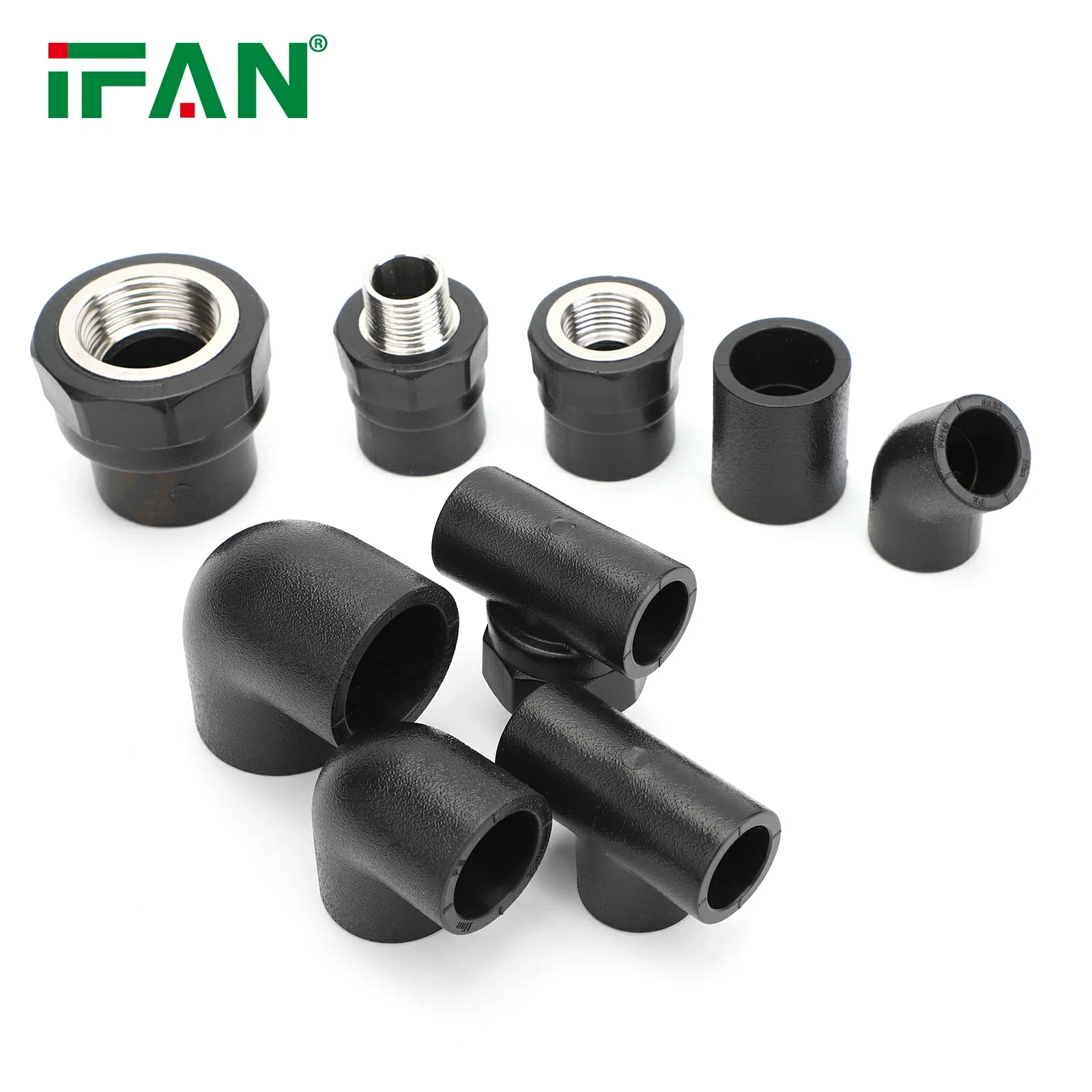
All Size PE100 HDPE Pipe Fitting
IFAN factory 30+ years manufacture experience support color /size customization support free sample.Welcome to consult for catalog and free samples.This is our Facebook Website:www.facebook.com,Click to watch IFAN's product video.Compared with Tomex products, our IFAN products from quality to price are your best choice, welcome to buy!
Chemical Resistance Characteristics of HDPE Pipe Fittings
Introduction
HDPE (High - Density Polyethylene) pipe fittings have gained widespread use in various industries, including water supply, sewage treatment, chemical processing, and oil and gas transportation. Their popularity stems, in part, from their excellent chemical resistance. Understanding the chemical resistance characteristics of HDPE pipe fittings is crucial for ensuring their proper application, long - term performance, and reliability in systems where they may come into contact with a wide range of chemicals.

HDPE Material Basics
Molecular Structure
HDPE is a thermoplastic polymer composed of long - chain polyethylene molecules. The high - density nature of the material is due to its relatively linear molecular structure with minimal branching. This linear structure allows the molecules to pack closely together, resulting in a more crystalline and dense material compared to low - density polyethylene. The strong carbon - carbon bonds in the polyethylene chains contribute to the material's overall stability and resistance to chemical attack. In a water - treatment plant, the HDPE pipe fittings' molecular structure enables them to withstand the chemical additives used in the water treatment process without significant degradation.
Crystallinity and Its Impact
The crystallinity of HDPE plays a vital role in its chemical resistance. Crystalline regions in HDPE are more tightly packed and less permeable to chemicals. When a chemical comes into contact with an HDPE pipe fitting, it has a harder time diffusing through the crystalline areas. Higher - density HDPE, which has a greater degree of crystallinity, generally exhibits better chemical resistance. For example, in a chemical storage facility where HDPE pipes are used to transport corrosive chemicals, the high crystallinity of the HDPE material helps prevent the chemicals from penetrating the pipe walls and causing damage.
Resistance to Common Chemicals
Acids and Bases
HDPE pipe fittings show excellent resistance to a wide range of acids and bases. They can withstand dilute and concentrated acids such as hydrochloric acid, sulfuric acid, and phosphoric acid. In a battery manufacturing plant, where HDPE pipes are used to transport acidic electrolyte solutions, the fittings remain unaffected by the acids over long periods. Similarly, HDPE is highly resistant to common bases like sodium hydroxide and potassium hydroxide. In a pulp and paper mill, where alkaline chemicals are used in the pulping process, HDPE pipe fittings can safely transport these solutions without corrosion or degradation.
Organic Solvents
HDPE also demonstrates good resistance to many organic solvents. Hydrocarbons such as gasoline, diesel, and kerosene have little effect on HDPE. In an oil - and - gas refinery, HDPE pipes are often used in secondary containment systems for storing and transporting hydrocarbons. The fittings can withstand exposure to these organic solvents, preventing leaks and ensuring the integrity of the storage and transportation systems. However, some strong polar organic solvents, such as certain ketones and esters, may cause swelling or softening of HDPE at elevated temperatures. It is important to consider the specific solvent and temperature conditions when using HDPE pipe fittings in applications involving organic solvents.
Oxidizing Agents
HDPE has moderate resistance to oxidizing agents. While it can resist the effects of mild oxidizing agents like hydrogen peroxide at low concentrations, strong oxidizing agents such as concentrated nitric acid can cause oxidation of the HDPE material over time. In a chemical laboratory where HDPE pipes may be used to transport diluted hydrogen peroxide solutions for certain experiments, the fittings can maintain their integrity. But in an industrial setting where high - strength oxidizing agents are used, proper precautions and material selection need to be considered.
Factors Affecting Chemical Resistance
Temperature
Temperature has a significant impact on the chemical resistance of HDPE pipe fittings. As the temperature increases, the molecular mobility of HDPE also increases. This can make the material more susceptible to chemical attack. For example, at higher temperatures, the resistance of HDPE to organic solvents may decrease, and the rate of chemical diffusion through the material may increase. In a hot - water supply system where the temperature of the water can reach up to 80 - 90°C, the chemical resistance of HDPE fittings needs to be carefully evaluated, especially if the water contains any trace chemicals.
Concentration of Chemicals
The concentration of the chemicals in contact with HDPE pipe fittings is another crucial factor. Higher concentrations of corrosive chemicals can accelerate the degradation process. In a chemical plant, if the concentration of an acidic or alkaline chemical in a pipeline increases due to a change in the production process, the HDPE fittings may experience more rapid corrosion. It is essential to know the concentration of the chemicals in the system and select HDPE materials with appropriate chemical resistance ratings.
Exposure Time
The length of time that HDPE pipe fittings are exposed to chemicals also affects their performance. Prolonged exposure to even relatively mild chemicals can gradually cause degradation. In a sewage treatment plant, HDPE pipes and fittings are constantly exposed to a complex mixture of chemicals in the sewage. Over years of continuous exposure, the fittings may show signs of wear and tear, although HDPE's inherent chemical resistance helps to minimize the damage. Regular inspection and maintenance are necessary to ensure the long - term integrity of the fittings in such applications.
Testing and Evaluation of Chemical Resistance
Immersion Testing
Immersion testing is a common method for evaluating the chemical resistance of HDPE pipe fittings. In this test, samples of HDPE are immersed in various chemicals for a specified period, typically weeks or months. The samples are then examined for any signs of physical changes, such as swelling, cracking, or discoloration. Weight changes of the samples are also measured to determine if there has been any absorption of the chemical. In a research laboratory, immersion testing is used to study the compatibility of new HDPE formulations with specific chemicals. The results of these tests can provide valuable information for selecting the right HDPE materials for different applications.
Accelerated Aging Tests
Accelerated aging tests are used to predict the long - term chemical resistance of HDPE pipe fittings in a shorter time frame. These tests involve exposing the HDPE samples to more severe conditions, such as higher temperatures and increased chemical concentrations, than they would encounter in normal service. By subjecting the samples to these accelerated conditions, researchers can simulate years of real - world exposure in a matter of weeks or months. In an industrial setting, accelerated aging tests can help manufacturers evaluate the performance of HDPE fittings in harsh chemical environments and make improvements to the material or design as needed.
Applications Benefiting from HDPE's Chemical Resistance
Water and Wastewater Systems
In water and wastewater treatment plants, HDPE pipe fittings are extensively used. The chemical resistance of HDPE allows it to handle the various chemicals used in water treatment processes, such as chlorine for disinfection and coagulants for sediment removal. In wastewater systems, HDPE fittings can withstand the corrosive effects of sewage, which contains a mixture of organic and inorganic chemicals. The use of HDPE in these systems ensures the long - term reliability of the infrastructure and reduces the need for frequent replacements due to chemical corrosion.
Chemical Processing Industry
The chemical processing industry relies heavily on HDPE pipe fittings for the transportation of a wide range of chemicals. Whether it is the transfer of acids, bases, or organic solvents within a chemical plant, HDPE's chemical resistance makes it a preferred choice. The fittings can be customized to fit different pipeline configurations, and their ability to resist chemical attack helps to maintain the integrity of the chemical transfer systems, preventing leaks and ensuring safe and efficient production processes.
Conclusion
The chemical resistance characteristics of HDPE pipe fittings make them a versatile and reliable choice for numerous applications. Their molecular structure, resistance to common chemicals, and the factors influencing their performance are all important considerations. Through proper testing and evaluation, and understanding the specific requirements of different applications, HDPE pipe fittings can be effectively utilized to transport and handle a variety of chemicals, contributing to the safe and efficient operation of various industrial and infrastructure systems.
Hot Tags: all size pe100 hdpe pipe fitting, China, suppliers, manufacturers, factory, wholesale, cheap, discount, low price, in stock, free sample, PEX AL PEX Pipe Laser, PEX Fitting, PPR Fitting Elbow, PPR Fitting Female Socket, Floor Drain Without Rubber, Stainless Steel Braided Hose
Send Inquiry
