
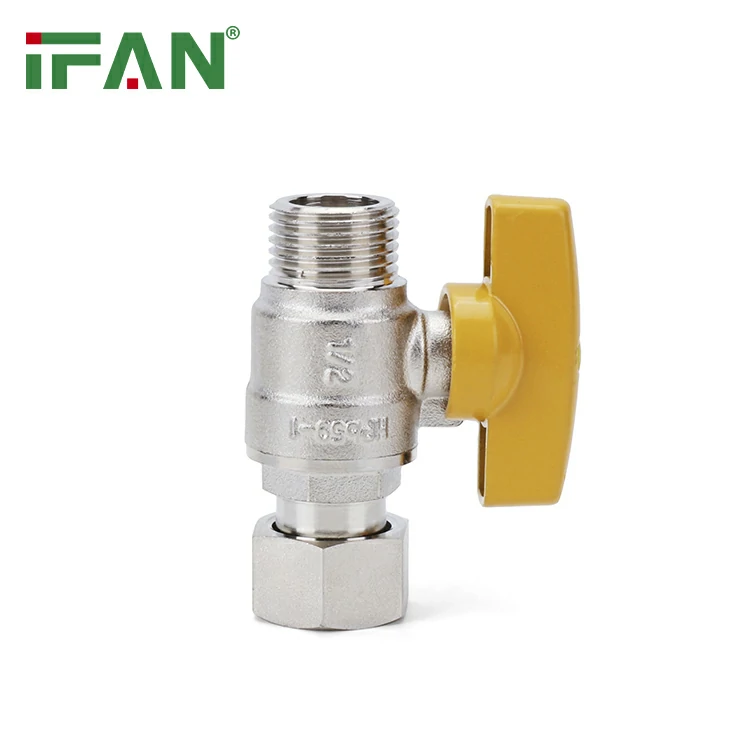

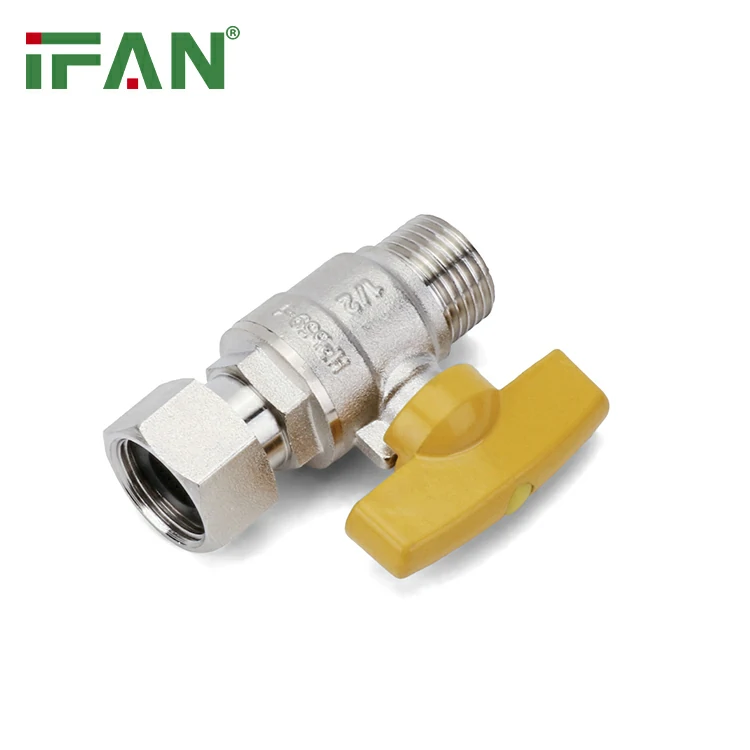
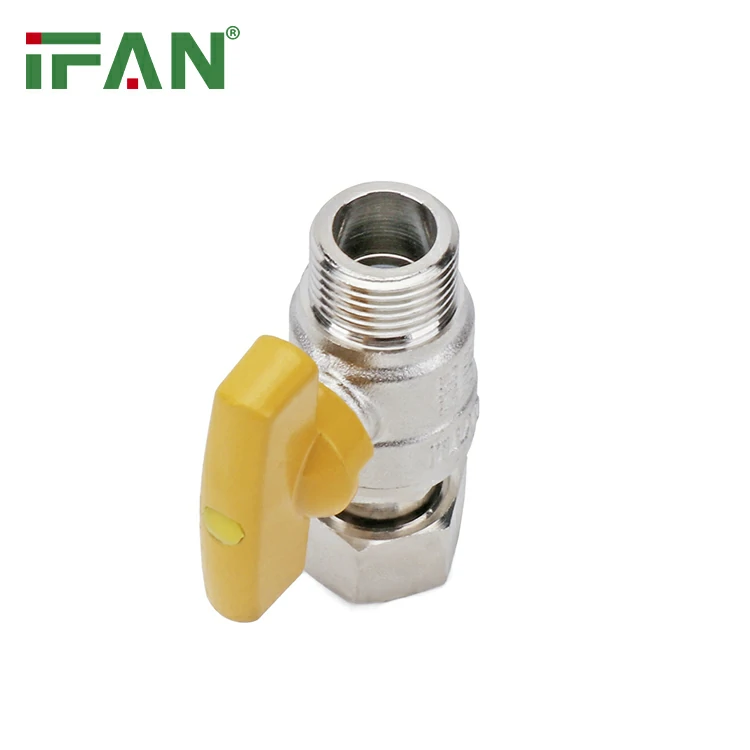
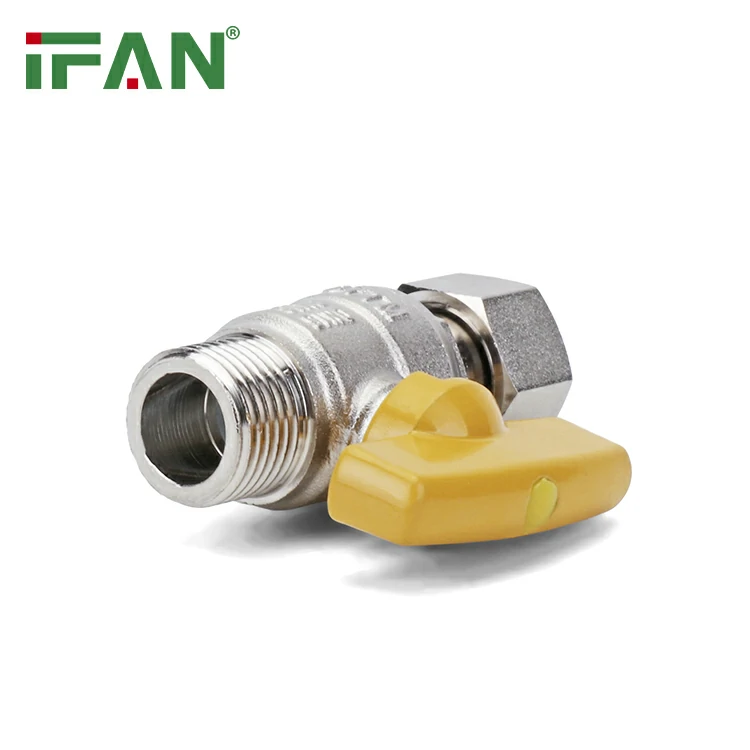
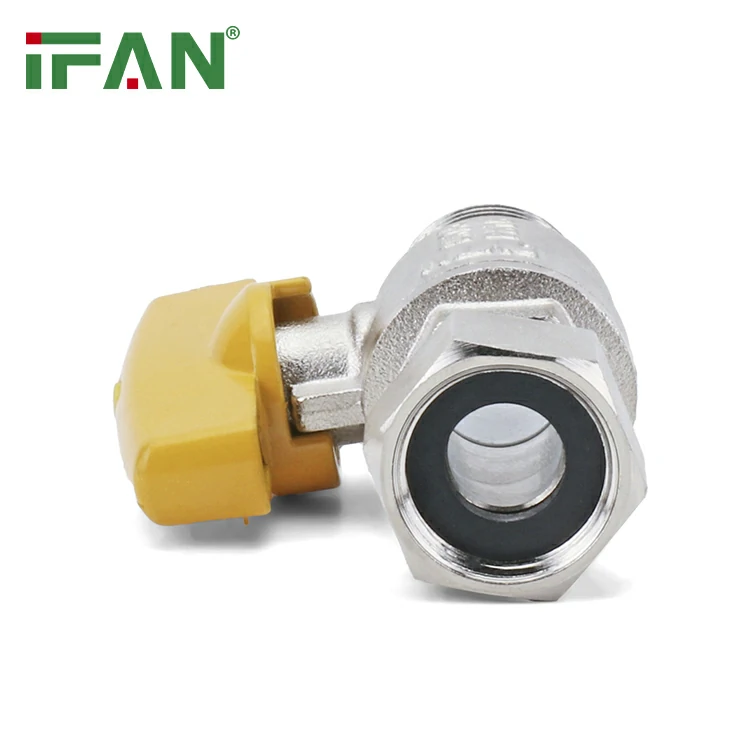
Brass Valve For Gas Water
IFAN factory 30+ years manufacture experience support color /size customization support free sample.Welcome to consult for catalog and free samples.This is our Facebook Website:www.facebook.com,Click to watch IFAN's product video.Compared with Tomex products, our IFAN products from quality to price are your best choice, welcome to buy!
Design Challenges and Coping Strategies for the Large-Diameter Structure of PEX Gas Valve: Flow Control and Pressure Equilibrium
Introduction
Large-diameter PEX (Cross-Linked Polyethylene) gas valves are critical for high-volume gas distribution in industrial and municipal systems, but their design faces unique hurdles. Scaling up to diameters like DN150-DN300 introduces complex issues in flow regulation, pressure stability, and structural integrity. This article dissects the core design challenges and presents engineering strategies to address them, combining material science, fluid dynamics, and manufacturing innovation.

Material and Structural Integrity Challenges
Thermal Expansion Complexity
PEX exhibits a thermal expansion coefficient (150-200×10⁻⁶/°C) far higher than metals, causing significant dimensional shifts in large valves. A DN200 valve operating across -20°C to 60°C can experience up to 3.2 mm of length variation, risking:
Seal Compromise: O-rings may exceed elastic limits, leading to permanent deformation.
Geometric Warping: Body distortion misaligns internal components, disrupting flow paths.
Coping Strategies:
Reinforced PEX Compounds: Incorporate glass fiber or carbon nanotubes to reduce expansion by 40%.
Elastic Joint Design: Integrate bellows-style expansion joints; a DN250 valve with a 50-mm bellows reduced thermal stress by 75%.
Pressure-Induced Deformation Risks
Hoop stresses in large valves are substantial: a DN200 valve at 4 bar generates ~12 MPa stress, nearing PEX's 15 MPa yield strength. This can cause:
Body Bulging: Sustained pressure leads to creep deformation.
Joint Failure: Threaded/flanged connections loosen due to material creep.
Coping Strategies:
FEA-Optimized Wall Thickness: Increase DN300 wall thickness from 12 mm to 18 mm via FEA, reducing stress to 8 MPa.
Metal-Reinforced PEX (MPEX): Stainless-steel sleeves provide hoop reinforcement while maintaining corrosion resistance.
Flow Control Challenges in Large Diameters
Turbulence and Pressure Loss
High flow rates (e.g., 500 m³/h in DN200) induce turbulence, with standard designs causing 0.5-1 bar pressure drops. This wastes energy and reduces system efficiency.
Coping Strategies:
Streamlined Internal Geometry: 15° tapered inlets reduce turbulence intensity by 30% versus sharp edges (CFD-verified).
Multi-Stage Plug Design: Sequential orifice openings in a DN250 valve cut pressure loss by 40% at full flow.
Uneven Flow Distribution
Large diameters create velocity gradients: DN200 CFD analysis showed 4 m/s variations between center and walls, causing localized wear.
Coping Strategies:
Honeycomb Flow Straighteners: 100-mm upstream straighteners in DN300 valves minimize velocity variation to <1 m/s.
Eccentric Plug Design: Off-center plugs direct flow to the valve core, reducing wall erosion by 60% in abrasive gas flows.
Pressure Equilibrium Challenges
Dynamic Pressure Transients
Rapid actuation in large systems generates water hammer; a DN200 valve closing in 0.5 seconds can create 12 bar pressure spikes.
Coping Strategies:
Adaptive Actuation Timing: Extend DN200 closing times to 3-5 seconds, dampening spikes.
Surge Chamber Integration: A 0.5 m³ chamber near the valve reduced spikes to <1.5 bar in field tests.
Differential Pressure Management
Start-up/shutdown can create extreme differentials; a DN250 valve in a transmission line saw 6 bar during emergency stops.
Coping Strategies:
Pressure-Balanced Plug: Equalizing holes in DN300 plugs cut operating torque by 50% under 5 bar differentials.
Pilot-Operated Control: Sensing upstream/downstream pressures to modulate opening, maintaining differentials within 1.5 bar.
Manufacturing and Sealing Hurdles
Molding Uniformity Issues
Large PEX bodies (DN150+) suffer uneven cooling, causing warping. A DN200 valve body showed 2 mm out-of-roundness post-molding.
Coping Strategies:
Multi-Zone Cooling Molds: Sequential cooling zones reduced DN200 out-of-roundness to <0.5 mm.
Post-Molding Annealing: 110°C heat treatment for 4 hours relieved internal stresses, improving stability by 30%.
Sealing Reliability Demands
Large-diameter seals require uniform compression: a DN200 O-ring needs 20-30 kN force, hard to apply consistently.
Coping Strategies:
Triple-Lip Seal Design: DN250 triple-lip seals reduced leakage by 95% versus single O-rings.
Metal-Backed PTFE Seals: Stainless-steel springs maintain force through thermal cycles; DN300 versions passed 10,000 cycles leak-free.
Case Study: DN300 PEX Gas Valve
A major utility's DN300 valve project addressed challenges with:
20% Glass Fiber PEX: Reduced expansion and improved strength.
Dual-Stage Tapered Plugs: Cut pressure loss to 0.3 bar at 800 m³/h.
Pilot-Operated Balancing: Maintained differentials <1.2 bar.
Metal-Backed Seals: Ensured 5,000-cycle reliability.
The valve passed 100,000 actuation cycles and thermal shock testing (-20°C to 60°C).
Future Innovations
Smart Sensing Integration: IoT pressure sensors detect early sealing degradation.
Nanocomposite Materials: Nanoclay-reinforced PEX further reduces expansion and gas permeation.
Additive Manufacturing: 3D-printed large valves with optimized flow paths, like lattice-structured bodies for weight reduction.

Conclusion
Designing large-diameter PEX gas valves requires a multidisciplinary approach to balance flow control, pressure stability, and structural resilience. By leveraging advanced materials, computational modeling, and manufacturing techniques, engineers can develop reliable solutions for modern gas networks. The case study exemplifies how systematic challenge-solving yields valves that meet rigorous operational demands, ensuring safety and efficiency over extended service lives.
Hot Tags: brass valve for gas water, China, suppliers, manufacturers, factory, wholesale, cheap, discount, low price, in stock, free sample, Water Plastic PPR Pipe, PPR Fitting Female Seated Elbow, Gas PEX AL PEX Pipe, PPR Fitting Female Socket, Hose, PEX AL PEX Pipe Overlap
Send Inquiry
