
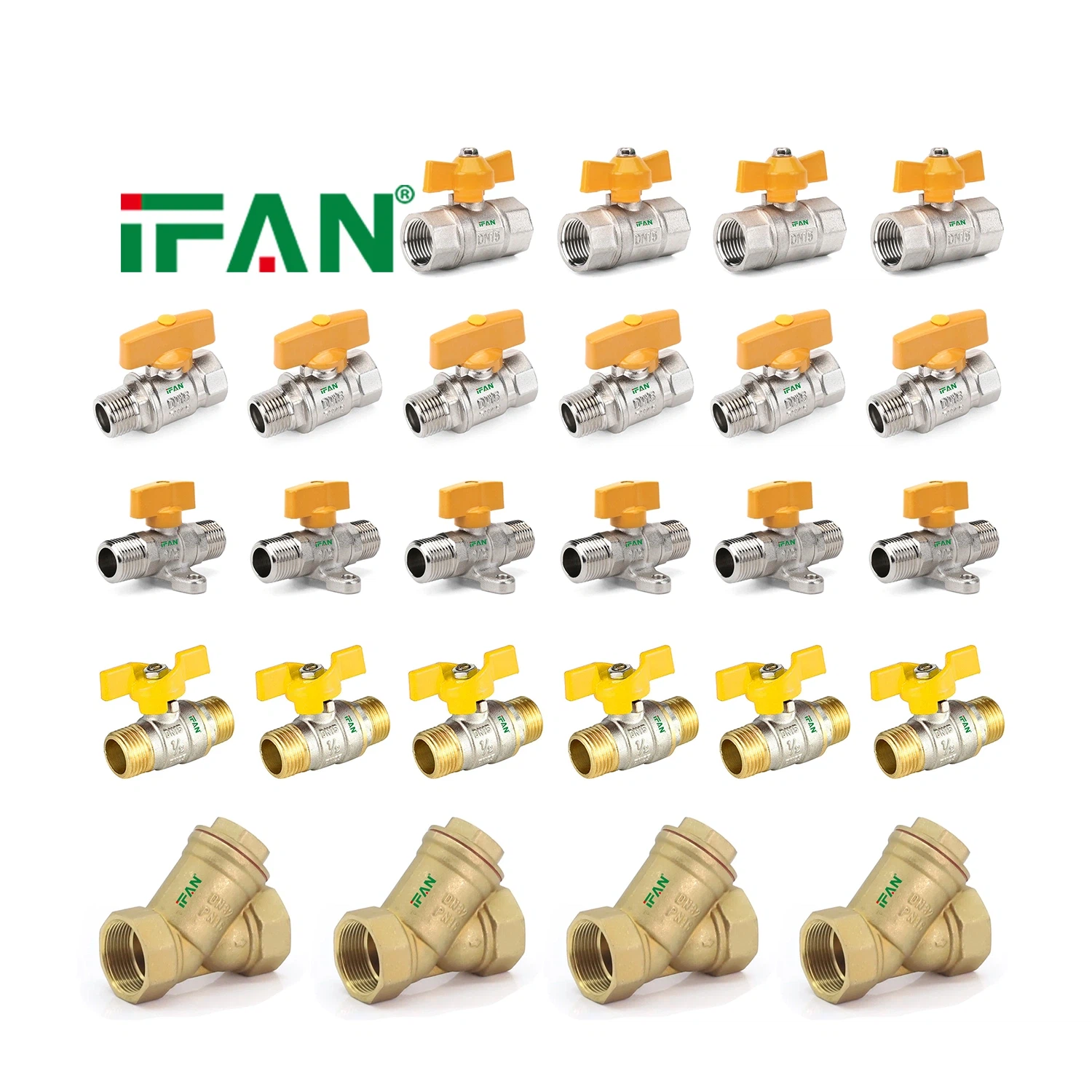
Corrosion Resistant Brass Ball Valve
Lifecycle Performance Value of Brass Ball Valves
Brass ball valves are widely used in residential, commercial, and industrial piping systems due to their durability, operational stability, and long service life. When evaluated from a lifecycle perspective, their value extends far beyond initial installation cost. By combining material resilience, precise manufacturing, and reliable sealing performance, brass ball valves deliver consistent functionality over decades of operation. Understanding their lifecycle performance helps engineers, contractors, and distributors make informed decisions for long-term system reliability.

Material Durability as the Foundation of Long Service Life
The lifecycle value of a brass ball valve begins with its base material. Brass exhibits an optimal balance between mechanical strength and corrosion resistance, making it suitable for continuous contact with water and other non-aggressive fluids. Its resistance to dezincification, stress corrosion, and general oxidation ensures structural integrity even under fluctuating temperatures and pressures.
Over time, piping systems are exposed to thermal expansion, pressure variations, and water chemistry changes. Brass maintains dimensional stability under these conditions, reducing the risk of deformation or cracking. This inherent material durability significantly lowers the likelihood of premature valve failure, directly extending service life and reducing replacement frequency.
Precision Manufacturing and Its Impact on Wear Resistance
High-quality brass ball valves rely on precision machining and controlled forming processes. Accurate ball sphericity, smooth internal surfaces, and tight dimensional tolerances minimize friction during operation. As a result, torque requirements remain stable throughout the valve's lifespan, preventing excessive wear on the ball and seats.
Consistent manufacturing quality also ensures uniform wall thickness and balanced stress distribution. This reduces localized fatigue points that could otherwise develop into leaks or mechanical failure over time. From a lifecycle standpoint, precise manufacturing translates into predictable performance and reduced maintenance intervention.
Sealing Performance and Long-Term Leak Prevention
Sealing reliability is a critical factor in evaluating lifecycle performance. Brass ball valves typically use high-grade polymer seats that maintain elasticity and sealing force even after thousands of open-close cycles. The smooth interface between the brass ball and sealing seats minimizes abrasion, preserving sealing integrity.
Effective sealing prevents micro-leakage that can cause water loss, pressure instability, or downstream component damage. Over long periods of use, maintaining a tight seal reduces system inefficiencies and avoids secondary repair costs. This leak-resistant behavior is a key contributor to the overall lifecycle value of brass ball valves.
Resistance to Operational Fatigue in Repeated Cycling
In many applications, brass ball valves are subject to frequent operation rather than remaining in a fixed position. Repeated cycling introduces mechanical fatigue, especially at the stem and ball interface. Brass demonstrates excellent fatigue resistance, allowing these components to withstand repeated stress without compromising performance.
Well-designed stem structures and secure sealing arrangements further enhance fatigue resistance. Even after extended use, valves continue to operate smoothly without stem loosening or torque spikes. This endurance under cyclic operation makes brass ball valves suitable for systems requiring frequent control, such as distribution networks and industrial process lines.
Maintenance Efficiency and Total Cost of Ownership
Lifecycle performance is not only about longevity but also about maintenance efficiency. Brass ball valves typically require minimal upkeep due to their corrosion resistance and stable mechanical behavior. When maintenance is necessary, standardized designs allow for straightforward inspection and replacement without system-wide disruption.
Lower maintenance demands reduce labor costs and system downtime. When evaluated over the entire lifecycle, these savings often outweigh the initial investment, resulting in a lower total cost of ownership. For large-scale installations, this economic advantage becomes particularly significant.
Environmental and Sustainability Considerations
From a sustainability perspective, the long lifecycle of brass ball valves contributes to reduced material consumption and waste generation. Fewer replacements mean lower resource extraction and manufacturing demand over time. Additionally, brass is recyclable, allowing end-of-life components to be reprocessed efficiently.
This combination of longevity and recyclability aligns with modern sustainability goals, enhancing the overall value proposition of brass ball valves in environmentally conscious projects.

Conclusion: Long-Term Value Beyond Initial Performance
The lifecycle performance value of brass ball valves is defined by durable materials, precision manufacturing, reliable sealing, and resistance to operational fatigue. These factors work together to ensure consistent performance over extended service periods with minimal maintenance. When viewed through a lifecycle lens, brass ball valves offer not only technical reliability but also economic and environmental benefits, making them a sound choice for long-term piping system applications.
Hot Tags: corrosion resistant brass ball valve, China, suppliers, manufacturers, factory, wholesale, cheap, discount, low price, in stock, free sample, Brass Valve Bibcock, Brass Core Ball Valve
Send Inquiry
